
Why Your Invoices Get Paid Late: And How to Fix It with Invoice Automation
2026-04-21
Introduction
Overdue payments do not arise from a single, large, and evident shift. They accumulate quietly over time. A bill remains unopened for a day. Following that, it is pending approval. It then gets transferred to the next payment period. Before you know it, a transaction that should have been simple becomes a hassle that extends for weeks. This is where invoice automation comes into play.
It does not pursue payments. It eliminates the causes that cause them to be delayed initially.
Businesses tend to believe that quicker payments are based on more desirable clients. As a matter of fact, they rely on superior systems. When the process of invoicing becomes organized, punctual, and predictable, the payments begin to take the same pattern.
Late Payments Are a Process Problem, Not Just a Client Problem
Late payments can often be attributed to clients. However, when you take a closer look, the majority of delays are inherent in the working process itself.
Consider the ways invoicing normally occurs. The work is done, and invoicing is dealt with later. Such a delay alone changes the whole payment schedule. Include ambiguous information or improper formats, and the invoice ceases to be convenient to work with.
Typically, from the client's viewpoint, the situation unfolds as follows: the invoice arrives late, necessitating a review, perhaps some clarifications, and then it is forwarded into the next internal cycle.
There is no willingness to pay. This is not a quick process to create.
The Real Triggers Behind Payment Delays
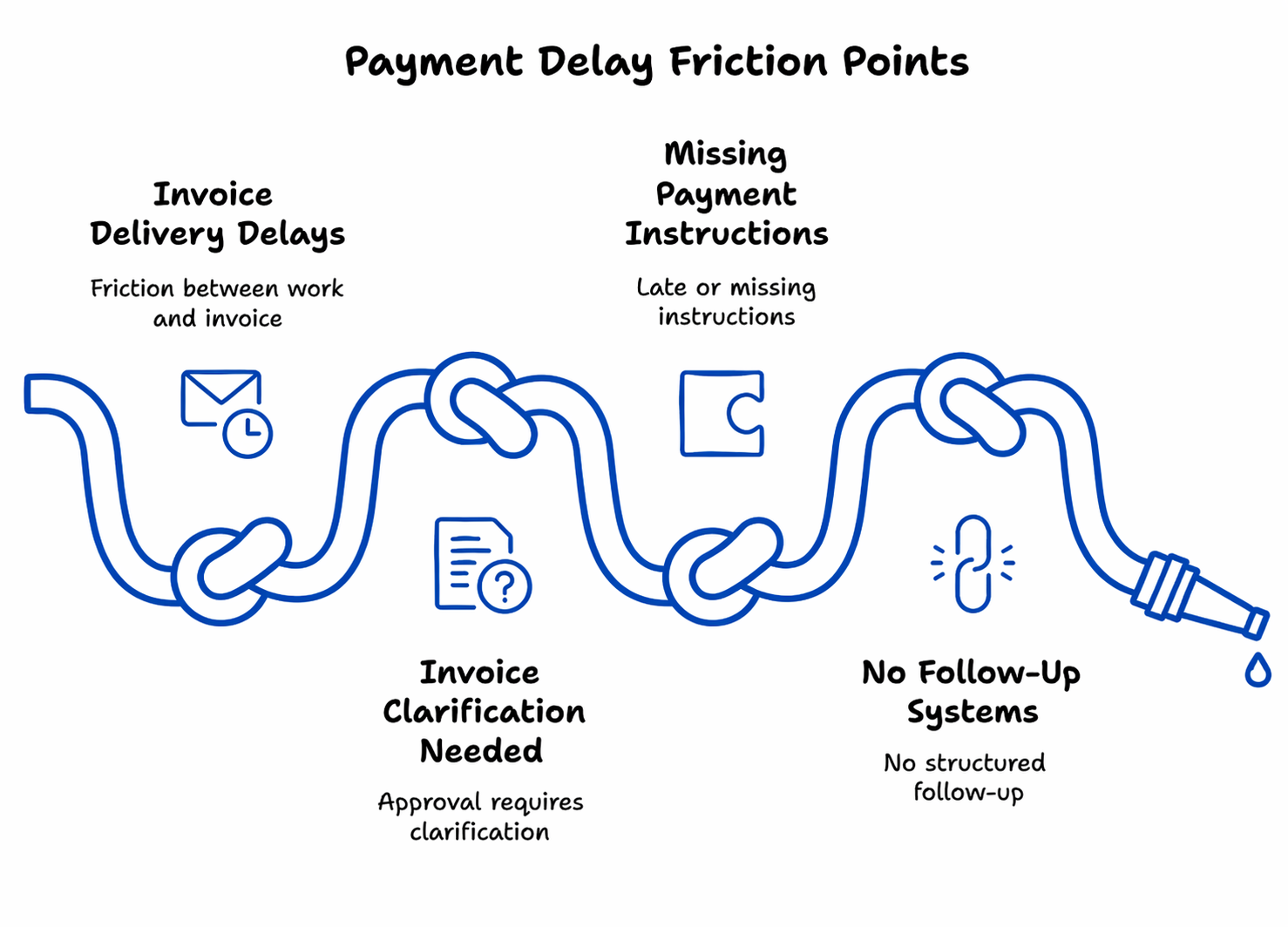
Instead of focusing on broad causes, it is beneficial to examine the smaller factors that hinder progress. These are the areas where friction occurs.
- Delays between work and invoice delivery.
- Invoices need clarification before approval.
- Late or missing payment instructions.
- None of the structured follow-up systems.
Each of these elements adds a tiny pause. When they are piled up, delays become the standard rather than an exception.
The frustrating thing is that most of these problems could have been avoided.
What Invoice Automation Actually Fixes
Another myth about invoice automation is that it is only about saving time. And that is not the end of the story. Its true value lies in eliminating doubtfulness in the process.
Invoices are not prepared by someone getting to it; with an invoice automation solution. They are automatically activated. The invoice is created and sent whenever a task is fulfilled or a milestone is achieved.
This is one modification that alters the time. There are no delays at the beginning of the work, but everything starts on time.
And when the beginning is made, the rest is likely to follow.
From Reactive Billing to Predictable Billing
Manual invoicing is reactive by nature. You remember to send invoices. You follow up when needed. You check the payment status manually.
Automatic invoice processing changes all these. The system is in charge of the routine procedures, hence there is nothing that relies on memory or time.
An example of a business that uses digital invoicing establishes a policy where invoices are sent as soon as a service has been performed. Reminders of payments are automatically set, and the status of any invoice is shown in real time.
Efficiency is not the only thing that has changed here. It is predictability.
Why Timing Matters More Than You Think
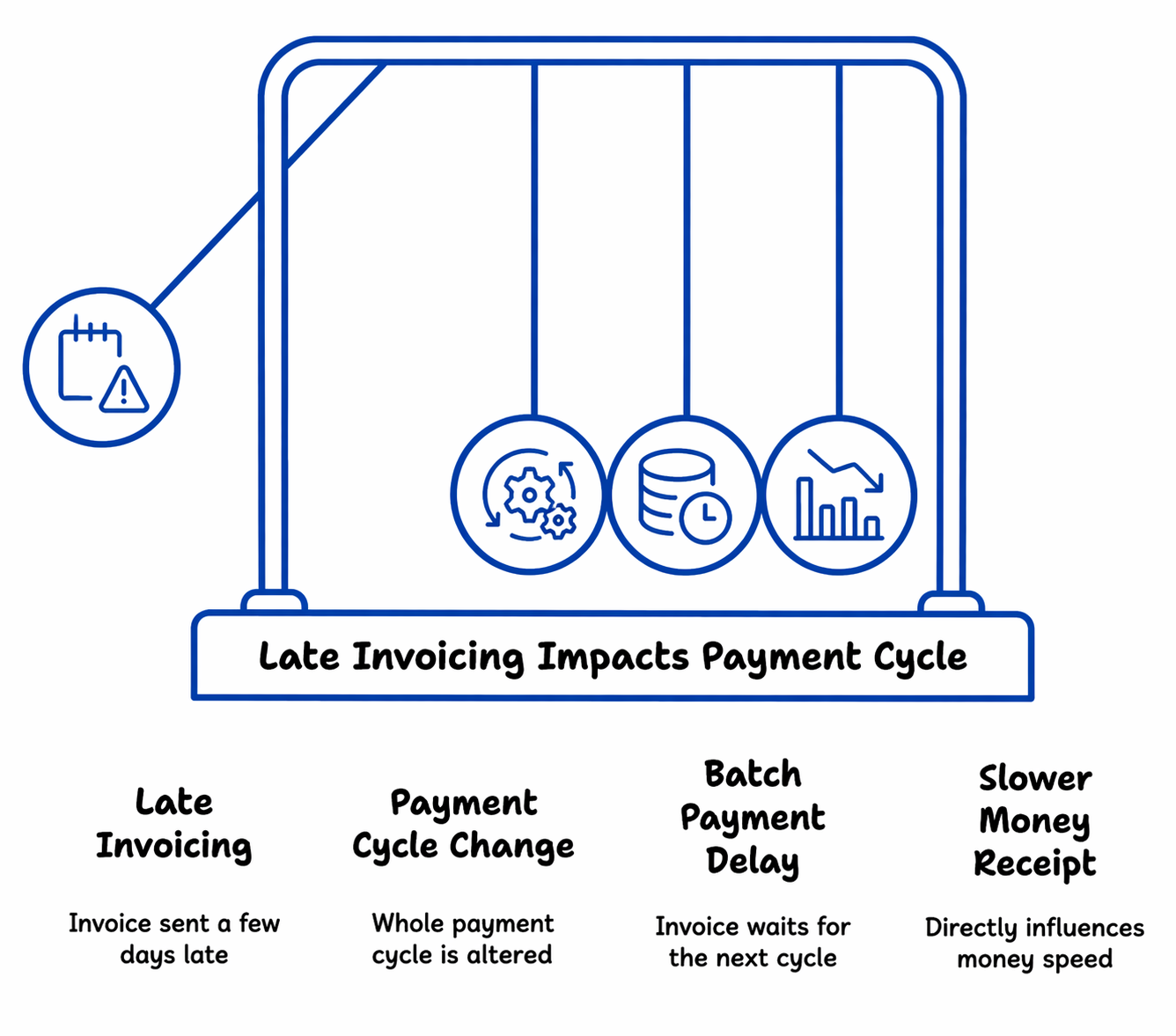
Timing is one of the factors that are most not considered when it comes to late payments. Invoicing a few days late may cause the whole payment cycle to change.
Lots of companies make payments in batches. In case your invoice does not get into that cycle, it waits until the next cycle. That in itself can put weeks on.
Automated invoices software eliminates this risk by making sure that invoices are released at the appropriate time, each time. It does not take time before work is done and payment is taken.
It sounds simple, but it has a direct impact on how quickly money comes in.
How E-Invoicing Reduces Friction on the Client Side
Speed does not merely mean promptness in sending invoices. It is also concerned with their ease of processing upon receipt.
This step is made easy by e-invoicing and digital invoicing. An e-invoice is designed in such a way that it can be read and interpreted by a computer and not only by human beings. That implies reduced manual work on the client side.
The approvals are quick when the clients do not have to re-enter the data or verify formats. Their system does not have unnecessary suspensions of the invoice.
Here, invoice processing that is automated silently comes into play. It eliminates friction that is not even visible to the businesses.
Consistency Builds Payment Behavior
Clients also form habits concerning their invoice practices. In case your invoicing procedure is not regular, so will their reaction.
One month's invoice comes early, and the next month it is late. Occasionally, the format is different, and occasionally details are omitted. This uncertainty brings everything to a crawl.
The invoice automation software introduces uniformity into it. All invoices are recognizable, delivered on time, and have all the necessary information.
With time, the clients cease questioning and begin to process. Delays can be reduced only by that change.
The Hidden Cost of Small Errors
One error in an invoice may not be that big. However, it causes uncertainty on the part of the client.
They pause. They verify. Occasionally, they check in to seek clarification. Every step is time-consuming.
Most of these errors are eliminated with an invoice maker or an automated system. Information is directly pulled out of the records, computations are automatically done, and validation is done prior to the invoice being sent.
There is reliability, which makes things work faster than is commonly overestimated.
A Practical Scenario Most Businesses Recognize
Take the case of a consulting firm that deals with several clients in a month. Their invoicing was previously based on manual input. Some invoices were delayed. Others needed corrections.
No complaints were made by clients; however, the payments were always delayed.
Once an invoice automation solution was switched to, invoices were automatically initiated by the end of the project. The structure was the same, and there were reminders.
In a couple of billing cycles, something was different. The payments became received nearer to the due date. Not that clients were forced, but because the process was simplified to follow.
Where Most Businesses Get Stuck
Automation is an easy concept to embrace, and most companies are scared at the entry stage.
Others are concerned about adopting e invoicing software and integrating that with their existing systems. Other people worry about integrating workflows that already work, although they may not be efficient.
Overcomplicated things are also a tendency. Companies seek an ideal system rather than a practical system.
However, in the real world, small and focused changes are most likely to result in the most improvement as opposed to massive changes.
How to Introduce Invoice Automation Without Disruption
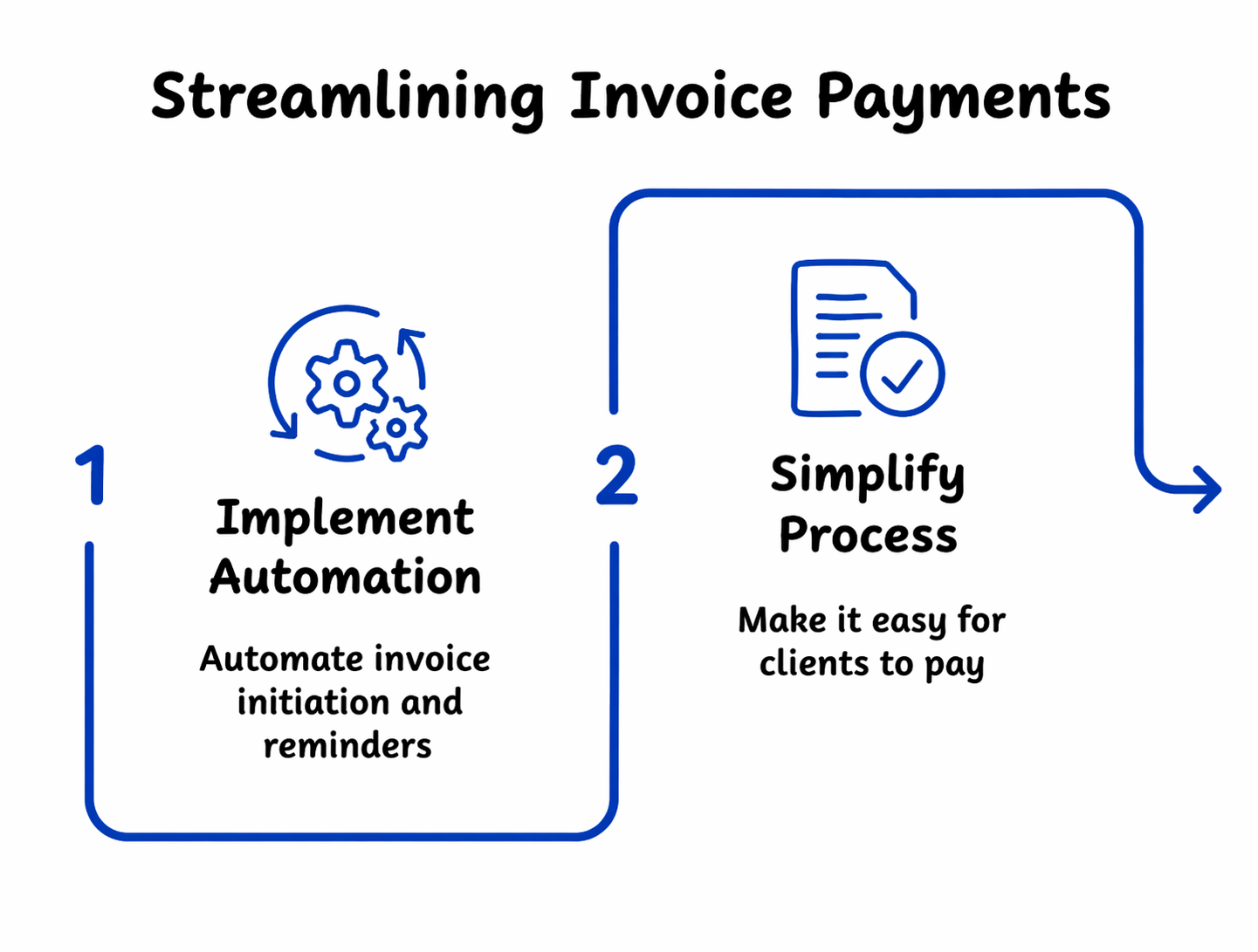
It does not necessitate a complete reconstruction to make a smooth transition. It begins by determining the points of delay that occur most frequently.
In case invoices are not sent on time, automate the process of sending invoices. When follow-ups are not regular, implement automatic reminders.
Select an invoice automation software that can adapt to your existing workflow rather than a new one. Features are not as important as integration.
Above all, allow the system to stabilize. Coherence is not formed in a single night, but through recurring cycles.
The Shift Toward Smarter Billing Systems
The move toward digital invoicing is part of a larger change in how businesses operate. Processes are becoming more connected, and manual steps are being reduced wherever possible.
E invoicing software is changing to accommodate this change. This is not only about the creation of invoices anymore. It is concerned with the establishment of a stream in which data flows through various stages.
It is at this point that businesses become truly efficient. It is not about working faster, but eliminating a series of steps that are not necessary at all.
Practical Ways to Improve Payment Timelines
To begin with, you can make a few specific changes to reduce your delays without necessarily revamping your whole system.
Immediately after work, send invoices. Always use the same format to ensure that clients are familiar with it. Ensure payment terms are clear and prominent.
Automation should be introduced in areas where it does not increase complexity. Subtle measures, such as automated reminders, can be felt.
This is aimed at facilitating the process for both parties.
Conclusion
Late payments are seldom accidental. They tend to be the outcome of a process that enables delays to occur. Inconsistency in invoicing, ambiguity, or lateness is an automatic extension of these trends in payments.
Invoice automation can provide a means to transform such a trend. Companies can minimize delays without incessant follow-ups and pressure by developing a system that is predictable, accurate, and timely.
Faster payments are not the only benefit. It is the capability of depending on a procedure that consistently functions similarly. In business, such reliability is what makes minor changes turn out to be permanent.
Tired of chasing late payments and fixing invoicing errors? It’s time to take control of your billing process.
With invoice automation and e-invoicing, you can send accurate invoices on time, reduce back-and-forth delays, and make payments flow faster and more predictably. Simplify your workflow, improve cash flow, and eliminate the stress of manual invoicing.
Start streamlining your billing today with PDF Invoicing. Create, manage, and send professional invoices effortlessly in just a few clicks.
Frequently Asked Questions
1. What is invoice automation, and how does it help with late payments?
Invoice automation uses software to create, send, track, and manage invoices with minimal manual input. Instead of waiting for someone to remember to invoice, systems trigger invoices automatically when work is completed or milestones are hit.
This reduces delays caused by forgotten billing, late invoicing, and inconsistent follow‑ups, which are common reasons invoices get paid late. By keeping the billing cycle predictable and on time, invoice automation helps businesses get paid faster and more reliably.
2. Can invoice automation actually reduce the number of late payments?
Yes. Invoice automation reduces late payments by eliminating many of the friction points in the billing process. Automated systems send accurate, standardized invoices on time, apply clear payment terms, and send reminders without relying on memory or manual chasing.
AP teams can also process e‑invoices faster because they integrate into accounting or ERP systems, reducing manual checks and clarifications. This combination of better timing, fewer errors, and smoother client‑side processing often shortens the average payment cycle.
3. How does e‑invoicing fit into invoice automation?
E‑invoicing is a core part of invoice automation that turns invoices into machine‑readable digital documents compatible with accounting and procurement systems. This allows both the sender and the client to automatically import, validate, and process invoices instead of re‑typing data by hand.
When combined with invoice automation, e‑invoicing reduces errors, delays, and clarification loops on the client side, which directly cuts down late payments and improves cash‑flow predictability.
4. Which software integrates with business records for accurate invoice management?
PDF Invoicing integrates with business records through a smart, structured invoicing system that keeps all financial data connected and accurate. It links invoice details like products, customers, taxes, and payments directly with business records to ensure consistency. This helps eliminate manual errors and keeps billing information automatically aligned with transaction history. Businesses can easily track, organize, and manage invoices for better reporting and audit readiness. Overall, it streamlines invoice management into a faster, cleaner, and more reliable digital process.