
E-Invoicing for Freelancers: How to Get Paid Faster Without Hassle
2026-04-13
Introduction
Freelancing provides independence regarding work, hours, and customers. However, it is not always so smooth when it comes to payments. Delayed payments, insufficient clarity in invoices, and awkward follow-ups can transform a completed project into a nightmare. It is here that the e-invoice begins to have a tangible impact. It is not merely a document in digital form, but a smarter way to handle the way you receive remuneration.
With the increase in the number of freelancers shifting to digital invoicing, billing is becoming not just a less tedious task, but also a smoother process. When properly implemented, it eliminates friction and confusion and assists in payments being received on time without having to chase after them.
Why Freelancers Often Struggle With Payments
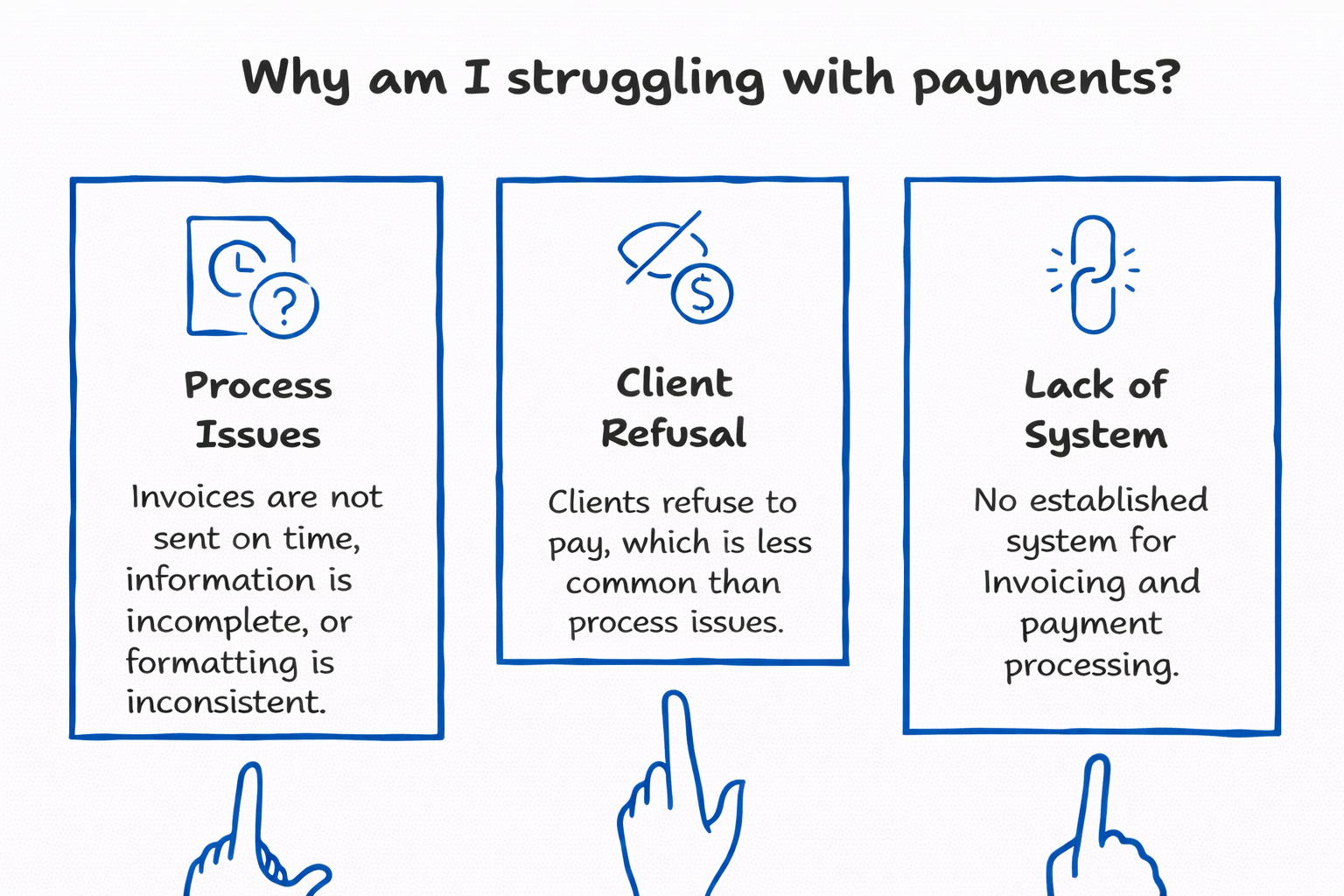
The majority of freelancers do not struggle with payment because clients refuse to pay. The underlying problem usually stems from the process itself. Invoices are not sent on time, information is not complete, or there is an inconsistency in formatting. Even small gaps in information can create confusion and delays.
Imagine sending a freelance invoice that requires the client to ask, “What exactly am I paying for?” or “Where do I send the payment?” That extra step alone can delay things by days.
In many cases, the problem isn’t the client. It’s the system, or lack of one.
What E-Invoicing Means for Freelancers
E-invoicing is merely the procedure of developing and transmitting invoices in a well-organized electronic form that is readily read, handled, and tracked. It is more than being able to attach a document to an email.
Invoices are standardized, precise, and far easier to handle with the assistance of invoicing software for freelancers or an invoice generator. All the client information, prices, and payment conditions can be stored and reused, eliminating the necessity to create a new one each time.
This slight movement alters the whole experience. You start to control the process, not in response to payments.
How E-Invoice Helps You Get Paid Faster
Quickness of payments is frequently reliant on clarity and promptness. E-invoice systems enhance the two.
To start with, invoices are emailed immediately. No time lag between the completion of work and payment is made. Second, they are simpler to comprehend. A client will be able to process an invoice where they are able to see the clean invoices with structured breakdowns.
Consistency is another crucial factor. Clients can be aware of what to expect when all the payment invoices are of the same format. That familiarity lessens confusion and accelerates approvals.
It does not have to do with pressuring clients to pay quicker. It is making it easier to do so on their part. This standardized, digital approach not only improves cash flow but also aligns with the broader shift toward a more efficient, e-invoice paperless future.
Moving Beyond Basic Freelance Invoice Templates
Most freelancers start with a basic freelance invoice template. It works temporarily, but in the long run, it begins to demonstrate its limitations. The editing process by hand, re-calculations, and formatting are now a part of the routine.
Much of that friction is removed by transitioning to an online invoice maker or generator. You no longer have to repeatedly edit a template and input the information; instead, allow the system to handle the rest.
The disparity is not big initially, but in several projects it becomes cumulative. There will be less time on invoices and more time on the real work.
The Quiet Power of Invoice Automation
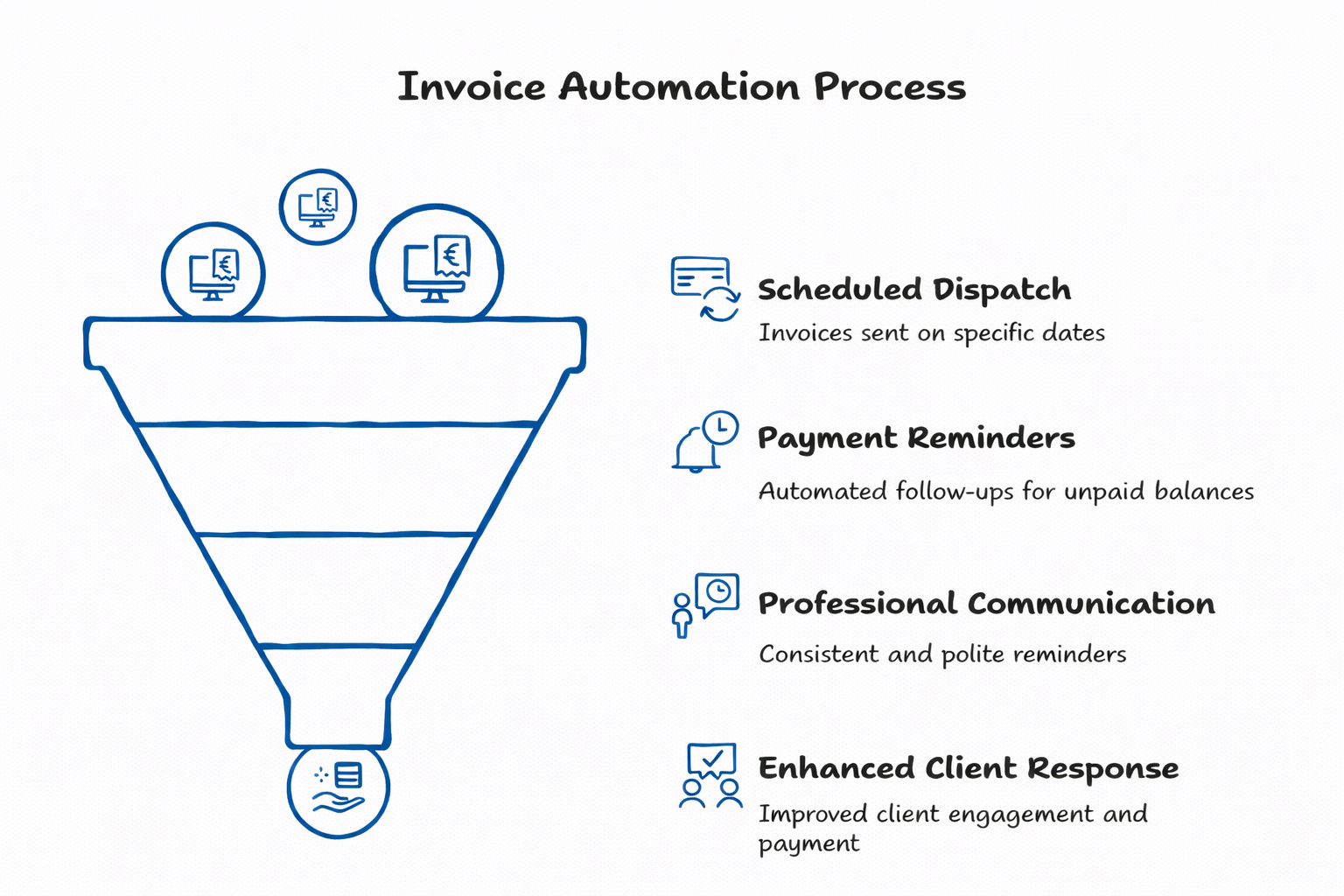
Automation can be perceived as something complicated, yet it can be very simple in invoicing. It could imply that invoices should be dispatched on a particular date or reminders of unpayable balances.
In the case of freelancers, it can eliminate one of the most awkward aspects of the work, which is collecting payments.
The system automatically sends follow-up messages in a professional and consistent format, as opposed to manually. It makes it more polite, organized, and less personal, something many freelancers can manage more easily.
In the long run, this uniformity enhances client response.
Where Proforma Invoices Fit In
Not all projects begin with an end bill. In most instances, a proforma invoice can be used to provide expectations before the commencement of work.
It includes the cost, scope, and terms in a very clear manner, providing the client with an opportunity to review and accept before anything is spent. This minimizes the possibility of conflicts in the future.
In the case of freelancers with bigger or custom jobs, this step can streamline the whole billing procedure. After the work is done, the final invoice merely reflects what has been previously agreed.
Creating a Billing Process That Actually Works
Freelancers often underestimate how much a straightforward process can improve their workflow. A complicated system is not needed; a standard one will do just fine.
A clear sequence might be as follows: confirm the project specifics, review the proforma invoice if required, complete the task, and promptly issue the final e-invoice. In this process, monitoring and notifications take place effortlessly.
Once this is assisted by digital invoicing tools, then it seems to be more in control. Guesswork is reduced, and delays are minimal.
The Client Experience Side of Invoicing
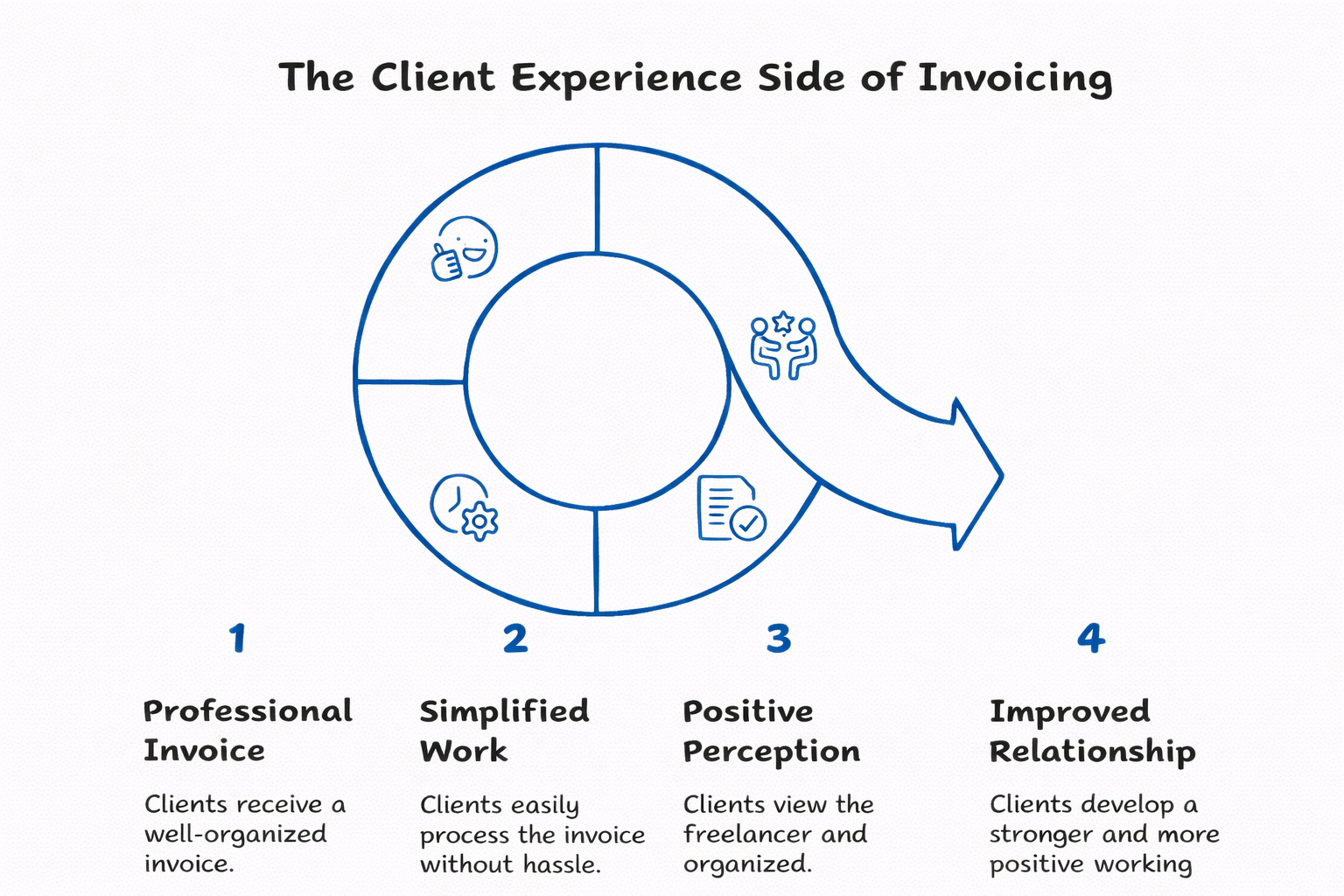
You can easily imagine invoicing as an action taken on your behalf, but it is also an experience of your client.
An effective freelance invoice makes the client recognize that you are a professional and well-organized. It simplifies their work as well. They do not need to seek information or to inquire. All is in place.
It may appear to be a minor detail, yet it will influence the perception of clients. The ease of billing usually results in an ease of working relationship.
Common Mistakes That Slow Down Payments
Despite using the right tools, some habits do create delays. Late invoices, omission of important information, or alteration of format may confuse.
The other problem is the lack of clear payment terms. When a client is not aware of the time or manner of paying, they will pay later.
Such errors can be easily ignored, yet they do make a difference. Most of the time, they can be fixed to achieve instant gains in the velocity of payment.
Choosing the Right Tools Without Overcomplicating It
There is no shortage of tools available to freelancers, but not all are required. The trick is to select one that suits your workflow.
A mere invoice generator is sufficient to some. Invoicing software for freelancers provides more control to those who have numerous clients or have constant projects.
The idea is not to adopt the best system, but a system that takes the friction out of your system.
The Long-Term Shift Toward Digital Invoicing
E-invoicing is not a one-off solution. It is a subset of a greater change in the way freelancers organize their work.
With the increased digitalization of projects, the systems surrounding them get more digital. When it is all linked up, it becomes a lot easier to keep the records, monitor payments, and manage the finances.
In the long-run, it results in organization and reduced surprises. You are aware of what has been paid and what awaits, and what should be done.
Practical Ways to Improve Your Invoicing Today
When you need to start or enhance your existing system, you should concentrate on some basic changes.
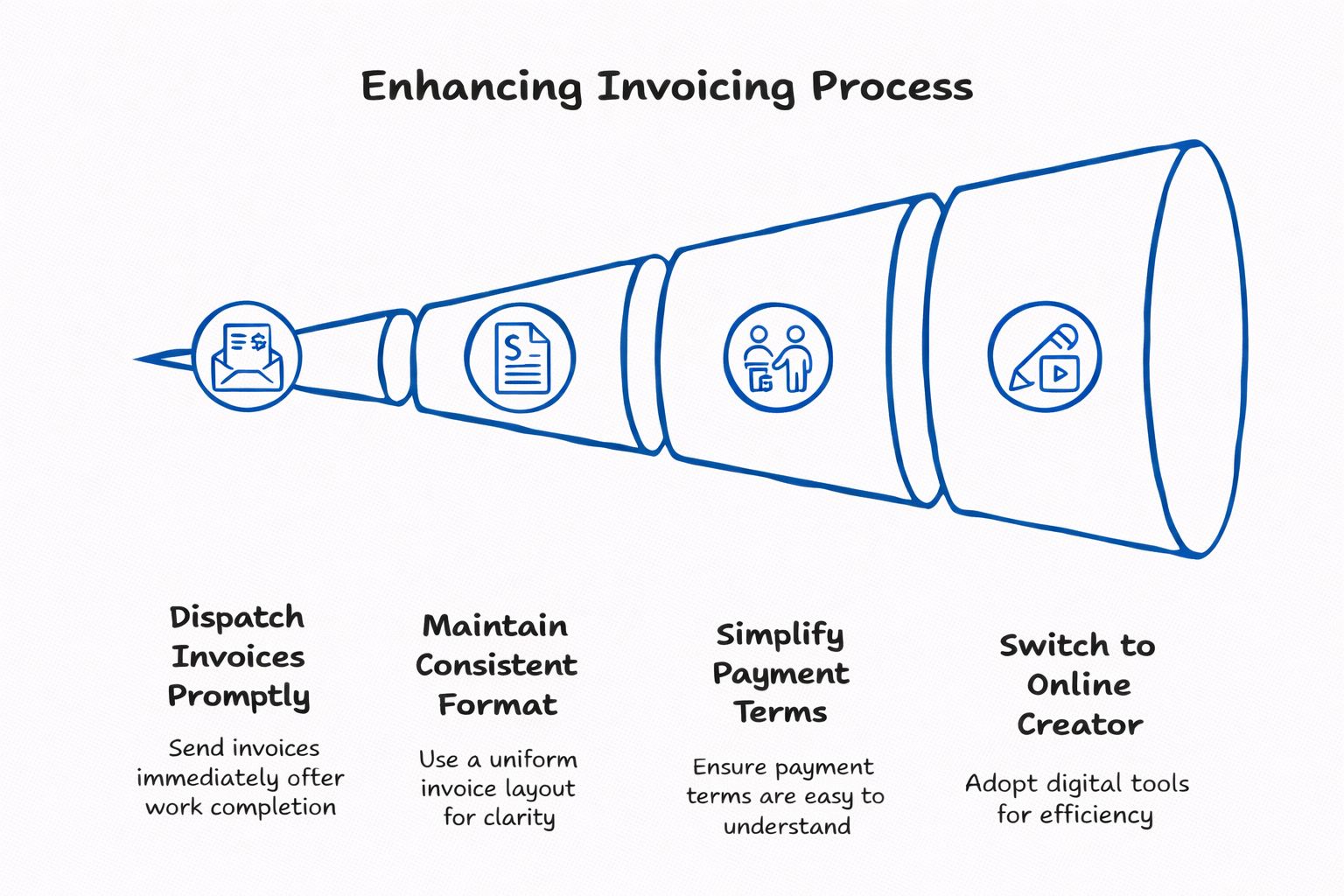
Begin by dispatching invoices as soon as work is done. Be consistent with the format so clients are aware of what to expect. Ensure that the terms of payment are simple.
In case you continue working with manual templates, you may want to switch to an online invoice creator or invoice generator. Such a minor change can help enhance accuracy and time-saving.
It is a concept of simplifying, not complicating.
Conclusion
Freelancers should find payment to be a clear and hassle-free experience. Yet, for most, it remains a source of anxiety. The problem does not lie in the work done; it is in the way billing is conducted.
E-invoice solutions provide a viable means to add organization and transparency to the process. Freelancers can reduce delays and enhance the overall workflow by integrating digital invoicing with automated processes and consistent formatting.
It has nothing to do with doing more. It is all about doing things in a wiser, more trusted manner. And when invoicing is made easy, payment will follow suit.
Want to Get Paid Faster Without Chasing Clients?
E-invoicing helps freelancers send clear, professional, and well-structured invoices instantly, so clients understand exactly what they’re paying for and process payments without delay. Simplify your workflow, reduce follow-ups, and enjoy smoother cash flow with smart digital invoicing.
Sign up to PDF Invoicing today and start creating hassle-free invoices that help you get paid on time, every time.
Frequently Asked Questions
1. What tools can help automate billing workflows with electronic invoicing?
Electronic invoicing can be automated using PDF invoicing tools that streamline invoice creation, sending, and payment tracking in one place. With PDF Invoicing, businesses can generate invoices instantly, set up recurring billing, automate reminders, and manage payments more efficiently—reducing manual work and speeding up the entire billing workflow.
2. How does e‑invoicing help freelancers get paid faster?
E‑invoicing helps freelancers get paid faster by delivering invoices instantly, standardizing payment details, and often integrating direct payment buttons (such as card or PayPal) so clients can pay on the spot. Many e‑invoicing tools also auto‑send reminders for overdue invoices, which reduces the need for awkward follow‑ups and shortens the average payment cycle.
3. Are e‑invoices secure and tax‑compliant for freelancers?
Yes, reputable e‑invoicing platforms, such as PDF Invoicing, store invoices digitally, encrypt sensitive data, and help maintain an audit trail, which improves both security and tax compliance. Many tools also auto‑track which invoices are paid, unpaid, or overdue and generate reports that make year‑end tax filing simpler for freelancers.
4. Do freelancers need special e‑invoicing software, or can they use simple invoice generators?
Freelancers can start with a basic online invoice generator, but moving to proper e‑invoicing or invoicing software gives them automations (recurring invoices, reminders, client portals, and multi‑currency support) that scale better as client volume grows. Minimal‑use freelancers may find generators enough, while those with repeat clients or global projects benefit from full‑feature invoicing platforms.