
The Role of E-Invoice in Building a Paperless Business Future
2026-03-25
Introduction
The current scenario is a silent but mighty change in business. The workflows in which the use of paper, physical storage, and manual handling was a major factor are gradually moving toward computer-based ones. It is not merely a change of convenience. It represents a more profound desire to have speed, accuracy, and flexibility in day-to-day operations. The focal point of this change is the increasing use of e-invoices, which is assisting the organizations in re-evaluating the manner in which they approach the invoice and financial processes.
E-invoicing is not simply a single upgrade. It belongs to a much larger trend of paperless invoicing and an entirely digital business setting. Given the need to minimize inefficiencies and enhance control over financial information, the shift to paperless processes has become not so much a choice as a logical next step.
The Shift Toward a Paperless Business Environment
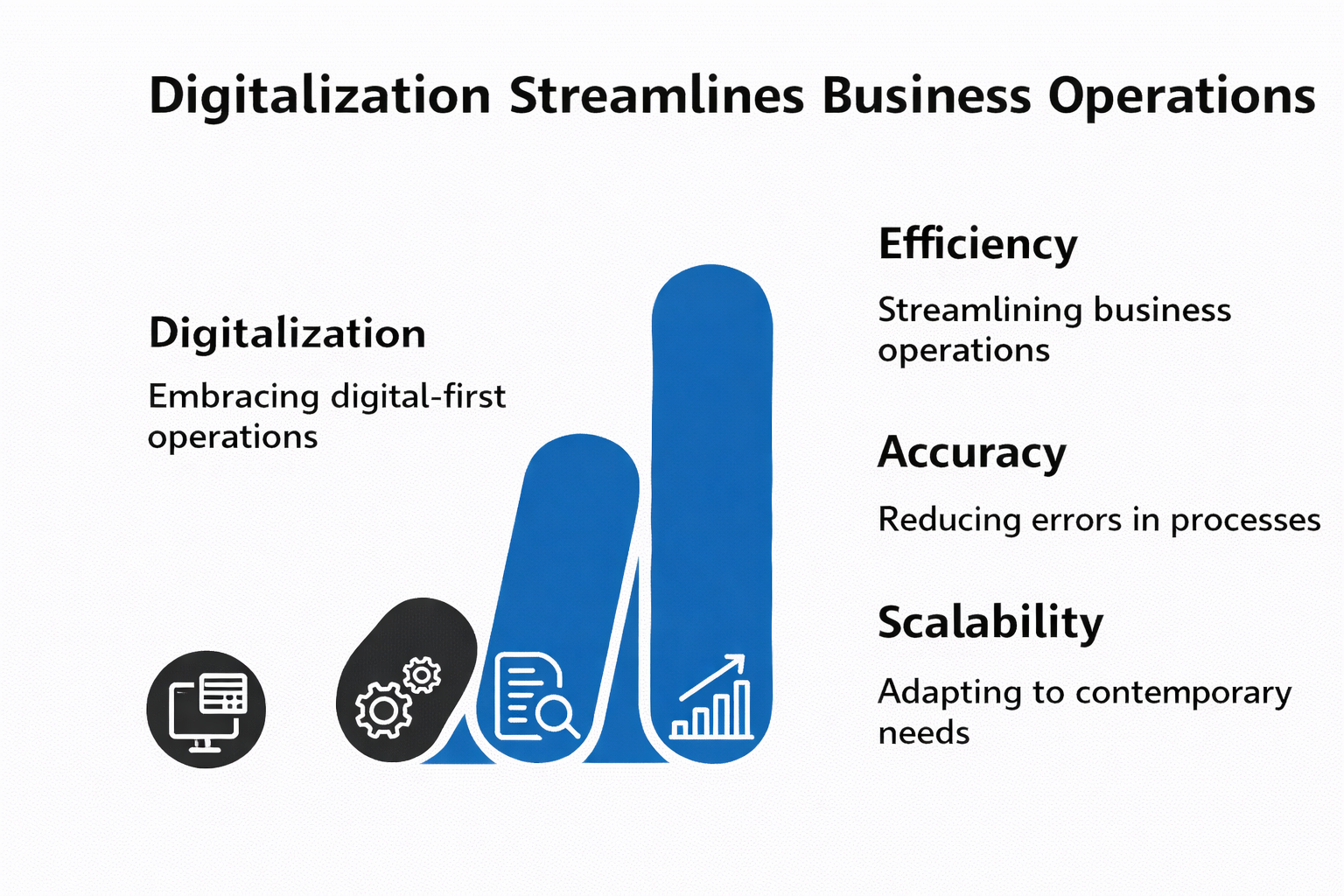
Digital-first operations have become more popular with businesses in the past couple of years. Remote work, cloud computing, and real-time work have redefined what is expected regarding the way work is done.
The paper-based processes, particularly the financial processes, are beginning to be out of place. They make everything slow, provide space to make mistakes, and it is hard to scale. Digital invoicing and other automated applications are assisting companies in streamlining their operations and adjusting to contemporary needs.
Why Paper-Based Systems No Longer Work
The traditional systems were constructed when business operations were not a fast-moving activity. Nowadays, they find it hard to keep pace. The paper invoices are slow to process, have to be stored physically, and are prone to misplacement or delay.
These inefficiencies are more pronounced when there is an expansion in the volumes of transactions. A developing company cannot afford systems that are prone to manual labor. Scalability is an actual issue given that access to records must be swift when conducting audits or financial reviews.
Understanding E-Invoice in the Modern Business Landscape
Electronic invoicing, or e-invoice is a digital invoice form that is structured, digitally transmitted, and processed by automation. It is not a mere PDF that can be sent via e-mail, and it is crafted in such a manner that it can be processed by software that automatically reads the data.
This is a systemized method of invoice management that is much more effective. Information moves across systems, and this eliminates repetitive manual entries. It also provides uniformity in the entire invoices, thus ensuring accuracy.
E-invoice systems are highly associated with automated billing. They are connected to accounting platforms, which enable businesses to operate the invoicing, payments, and financial records more seamlessly. Rather than invoicing being an independent process, it becomes a platform for a digital process.
Why Businesses Are Choosing E-Invoice Today
The need to have quicker and more trustworthy financial procedures is pushing businesses toward online invoicing systems. When operating in a competitive environment, there is a direct relationship between billing delays and cash flow and making decisions.
Speed, accuracy, and flexibility are the requirements companies face today. As remote teams are becoming the norm, the use of paper or manual approvals causes a lot of unnecessary friction. The barriers are eliminated with digital systems, and processes become smoother.
Regulatory authorities also have an increasing movement towards electronic invoicing. Lots of areas demand some systematic reporting, so e-invoice systems are not only convenient but also needed.
How E-Invoice Enables a Truly Paperless Workflow
E-invoice systems contribute to the development of an end-to-end digital workflow. All stages involved in the invoice preparation to the ultimate payment stage can be done electronically.
Businesses do not have to alternate between documents, emails, and spreadsheets but rather use a single system, and understanding related workflows, such as proforma invoices, can further streamline operations.
From Manual Tasks to Automated Processes
In the conventional system, invoicing will consist of a number of unrelated processes. The information is gathered, entered in templates, verified, and subsequently sent. Every single step presents an element of delay or mistake.
Inverse automation makes the job much simpler. Information is also pulled directly out of existing systems. Invoices are created automatically through an invoice generator, and approval processes are managed electronically, eliminating the need for manually creating proforma invoices.
An example of a service-based company is one that used to take hours to make monthly invoices. Once the system is digitized to invoice clients, it can automatically create invoices using the stocked details of clients and billing cycles. It is not only a matter of speed, but also consistency and reliability.
Key Benefits of Adopting E-Invoice
Better Cash Flow Management
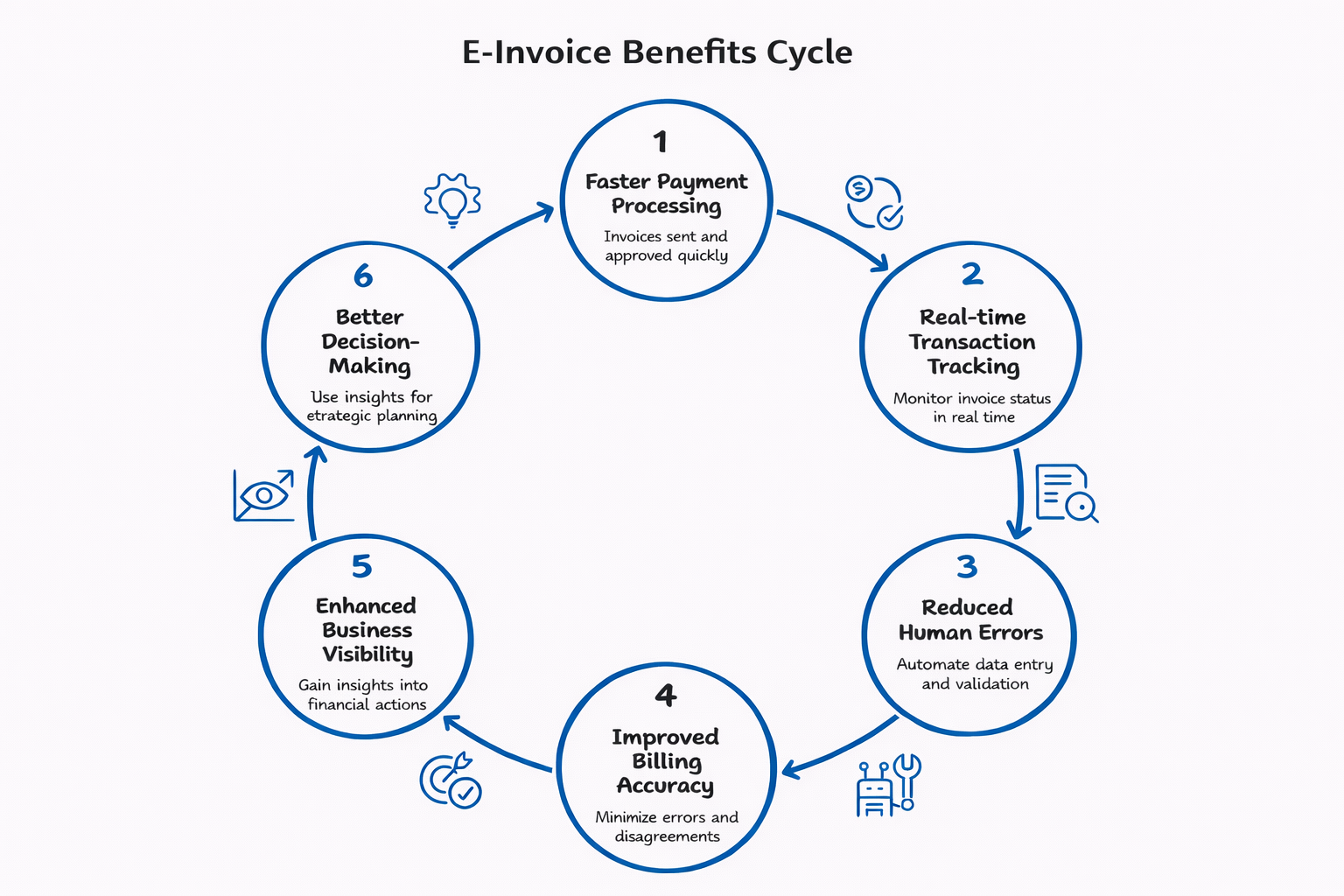
Faster payment processing is one of the most realized immediate advantages of e-invoice systems. Invoices are sent immediately, and approvals are given without delays brought about by the handling of paper.
Invoices' transaction status can also be traced in real time by businesses, and this has assisted businesses in managing their receivables better and also avoiding unnecessary follow-up.
Reduced Human Errors
Small but significant errors are common with manual invoicing. False entries, omitted information, or duplication of the information may create confusion and slow down payments.
Electronic invoicing mitigates these risks through automating data entry and subjecting the data to validation. This contributes to improved billing and a reduction of disagreements with the clients.
Better Business Visibility
Computerized systems present a better image of financial action. Businesses can watch it all at a single location as opposed to the fragmented records, and using invoice tracking tools ensures nothing slips through the cracks.
They can easily keep track of:
- Outstanding invoices
- Payment timelines
- Approval progress
This visibility facilitates planning and enhanced decision-making.
Cost Efficiency and Environmental Impact
Towards paperless invoicing, there are financial and environmental benefits.
Conventional invoicing entails constant expenses in terms of printing, paper, storage, and administrative efforts. These costs are not necessarily transparent, but they are gradually piling up. Digital invoicing removes a lot of these costs, thus making operations more efficient.
Simultaneously, minimizing the use of paper is a part of the sustainability efforts. Companies employing e-invoicing consider a step to reducing waste and sustainable environmental policies.
Compliance, Security, and Data Accuracy
With the increasing complexity of financial regulations, businesses should have systems that help them to comply without additional workload.
This is made easier through the e-invoice systems, which automatically implement tax regulations and give detailed records. All the transactions are recorded, and hence it is easy to trace any change in transactions and make them ready to audit.
The other important benefit is security. Cryptography and restriction of access to sensitive data are employed in digital systems. This is far better protection than paper records or files that are not secured.
It is also accurate since information is processed in the same manner throughout the system. This minimizes differences and enhances trust in financial reporting.
Industries Leading the Adoption of E-Invoice
Electronic invoicing is being adopted in industries, although certain sectors are adopting it rapidly because of the nature of their operations.
The retail and e-commerce businesses have the advantage of quicker processing of high volumes of transactions. The businesses in manufacturing use digital invoicing to get in touch with their suppliers and distributors. It is also used by logistics firms to guarantee timely billing in different locations.
E-invoice systems are also being embraced by small and medium enterprises to ease invoice management and enhance cash flow. The necessity to be efficient and accurate is one of the common motives, no matter what type of industry.
Common Challenges in E-Invoice Adoption
Initial Setup and Integration Issues
Implementation of a new system usually involves a combination of the new system with the existing tools. This may require time and proper planning, where the businesses operate with the use of old software.
Resistance to Change
Traditionally oriented employees can be bound to be confused with new procedures. This can put a halt to adoption unless properly directed.
Data Migration Concerns
The transfer of current records to a new system should be done cautiously. It is crucial to make sure that the data is accurate during this transition.
How Businesses Successfully Transition to E-Invoice
A gradual and well-planned approach normally leads to successful adoption. Companies that do their preparation in advance for their teams and systems can achieve better outcomes.
Training plays a key role. Employees will be able to accept the change more when they know how digital invoicing can help them work less. The small rollout will also assist in detecting possible problems at an early stage.
With time, as confidence increases, a business may increase the system within departments and processes.
The Future of E-Invoice in a Digital Economy
The use of e-invoice systems will only increase as companies transition more into the digital world. There is an increasing level of automation, and financial processes are becoming more interdependent.
A higher level of integration between invoicing and other business systems is likely. Automated reporting and real-time analysis of data will become more prevalent. Meanwhile, regulatory requirements will keep driving businesses to standardized electronic invoicing.
It is evident where it is headed in the long run. Paperless ecosystems are getting to be the new normal and not the exception.
Practical Tips for Businesses Moving Toward Paperless Invoicing
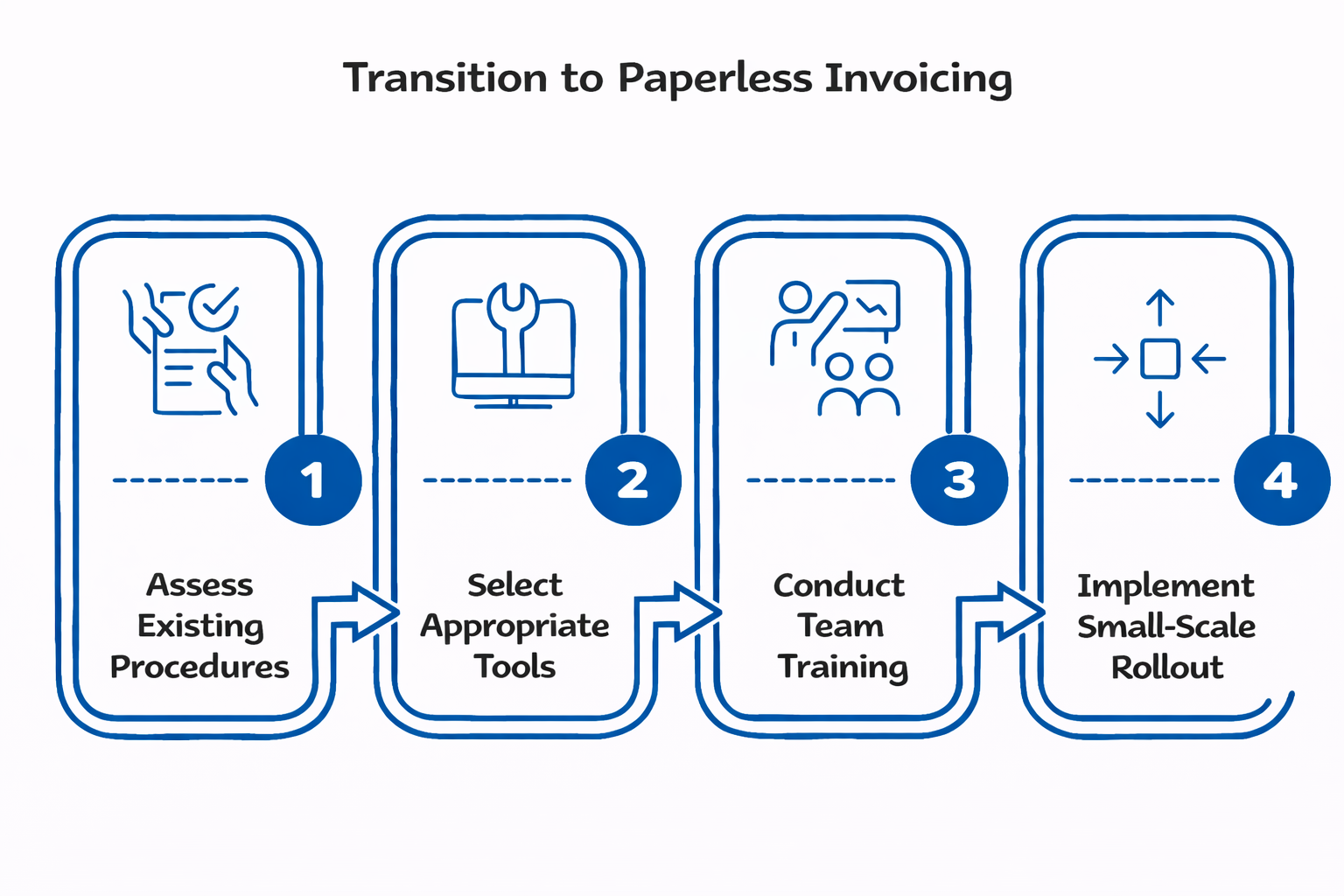
To businesses embarking on the journey, the following steps can be practical towards ensuring the transition is smooth:
- Assess your existing invoicing procedures and determine the delays.
- Select the tools that suit your business.
- Team training will make the team use it consistently.
- Begin with a small-scale rollout.
A gradual approach will enable businesses to evolve without causing any break in business.
Conclusion
The trend towards the paperless business environment is not a mere trend. It is an obligatory measure that organizations that wish to remain efficient, accurate, and competitive should take. E-invoice systems are taking centre stage in this transformation, by substituting manual operations with refined digital operations.
The implementation of electronic invoicing in businesses will allow for minimizing the number of mistakes, enhancing cash flow, and being more aware of their financial activities. More to the point, they establish a platform on which future development in the more digitized economy can be anchored.
The use of e-invoice solutions is, in most aspects, a clever and viable choice. It does not involve altering things immediately, but a gradual transition to a more efficient and future-oriented mode of operation.
Ready to Move Your Business Toward a Paperless Future?
Switch to e-invoicing today and streamline your billing process with faster approvals, fewer errors, and full visibility of your financial workflows. Automate your invoices, improve cash flow, and build a smarter, more efficient business that’s ready for the digital economy!
Frequently Asked Questions
1. What Is an E-Invoice and How Does It Differ from Paper Invoices?
An e-invoice is a structured digital document transmitted and processed automatically between systems, unlike paper invoices that require manual handling and physical storage. It eliminates printing, mailing, and filing costs while enabling instant delivery and integration with accounting software. This structured format ensures machine-readable data for seamless automation.
2. What Are the Main Benefits of Switching to E-Invoicing?
E-invoicing speeds up invoice processing from days to hours, improving cash flow through faster payments and real-time tracking. It reduces errors by automating data entry and validation, cutting costs on paper, storage, and labor by up to 60-80%. Businesses gain better visibility into outstanding invoices and compliance with regulations.
3. How Does E-Invoicing Support a Paperless Business?
E-invoicing creates end-to-end digital workflows, from generation to payment, replacing scattered emails and spreadsheets with a unified system. It minimizes paper use, supports sustainability, and integrates with ERP tools for automated approvals and reporting. This shift enhances scalability without physical storage needs.
4. What Challenges Arise When Adopting E-Invoicing?
Common hurdles include initial integration with legacy systems, data migration risks, and employee resistance to new processes. Setup requires planning to avoid disruptions, but gradual rollouts and training mitigate these issues. Compliance with varying regional regulations can also demand system adjustments.
5. Which Industries Benefit Most from E-Invoicing?
Retail, e-commerce, manufacturing, and logistics lead adoption due to high transaction volumes needing quick processing and supplier coordination. SMEs gain efficiency in cash flow and invoice management, while all sectors benefit from cost savings and audit-ready records. Banks and finance see strategic value in compliance and data accuracy.