
How to Create a Tax Invoice That Meets Global Compliance Rules
2026-06-19
The Invoice was Perfect! Until the Finance Team of the Client rejected the Invoice
The trouble typically begins with a Tax Invoice after you've sent it.
The project has been completed. The client is happy! You dispatch the invoice, assuming it will be settled within the next couple of days. Then an e-mail comes in from accounting that requests a copy be resubmitted because the tax ID number is missing, the tax content doesn't match the contract, or the invoice is not compliant with the local tax regulations.
This is a very common scenario for freelancers, agencies, consultants, and small businesses that operate on a cross-border basis. Making an invoice is no longer and quite something as much as requesting payment. It is all about ensuring the client and relevant financial regulations are met to prepare a document that meets the client's expectations.
Fortunately, there are no technical or international tax rules to learn when making invoices compliant. For most of the time, it's all about the understanding of what data ought to be conveyed through the bill, when it is present, and also the way in which to convey the details readily and clearly. This guide takes you on the nitty-gritty of making invoices that are not only cross-country usable but also don't create a headache when it comes to legality.
Why Tax Compliance Starts With the Invoice Itself
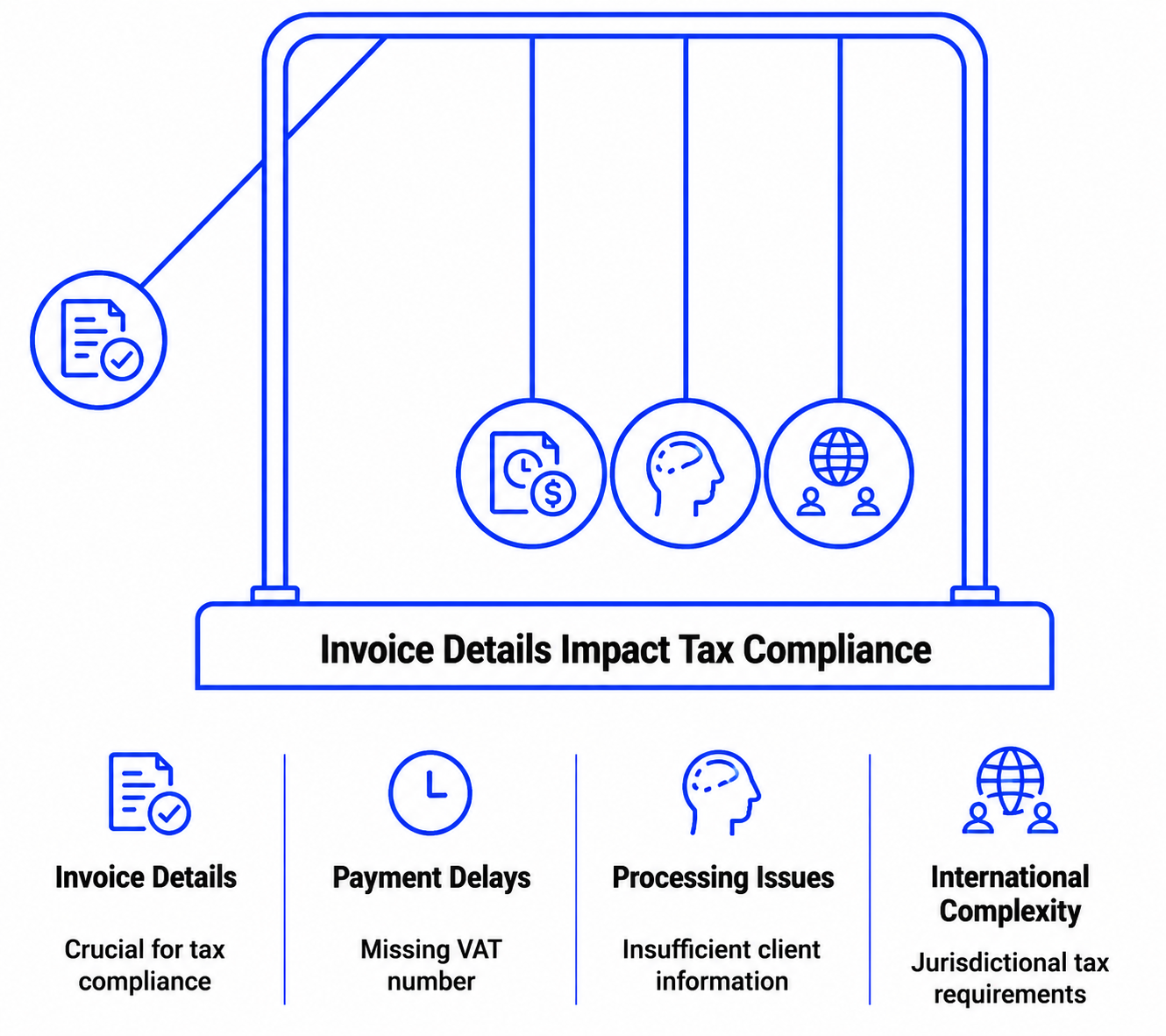
A lot of the time, it seems like compliance occurs in the background during accounting or tax season. The invoice is actually the first document that is typically handled by auditors, even accountants and finance departments.
An invoice is a document that serves as proof of a previous transaction. It can verify that it was sold by whom, to whom, the actual cost of the product or service, and whether any taxes were properly applied.
That is why, seemingly, “small details” are important.
Delays in payments can be caused by the absence of a VAT number, by an incorrect VAT calculation, or by unclear currency information. In some cases, there is no specific question based on the work itself. The invoice simply doesn't contain enough information for the client's finance team to process it.
If the business has international operations, invoice requirements can be even more crucial as there need to be certain requirements for information to be included in all tax invoices for different jurisdictions.
It is not about perfection; it is about improvements. The objective is to arrive at a document that provides sufficient information to both parties in a way that allows them to enter into a payment with confidence and ensures that they keep proper records.
The Building Blocks Every Tax Invoice Should Include
There are rules for compliant invoices in different countries, but most have the same core.
All tax invoices need to be clear and should contain information relating to the seller, the buyer, the transaction, and any tax implications.
A minimum of the following should be added to your invoice:
- Identify the name and detailed information of the business.
- Information about the client company.
- Invoice number.
- Invoice date.
- Identify your services or products in detail.
- The number and size of projects.
- Subtotal amount.
- If applicable, include the tax information.
- Total amount payable.
- Payment terms.
This one can be so basic that it can easily be overlooked, but it can cause problems.
For instance, if a consultant is working for a company overseas, he or she may see tax registration as irrelevant and not include it. But the client might want that information to report on before they authorize payment.
The invoice must pre-empt the questions.
VAT Numbers: The Small Detail That Causes Big Delays
One of the most common reasons international invoices get rejected is missing tax registration information.
A VAT invoice is a legal document that includes details such as the invoice number, tax identification, goods or services provided, and a clear breakdown of applicable taxes.
For many cross-border transactions, the supplier's registration number, the client's tax number, or both may be required depending on local regulations.
Imagine a digital marketing agency billing a client overseas. The work is completed, but the invoice is returned because the required registration details are missing.
The result? Payment is delayed, extra follow-ups are needed, and everyone loses time.
If tax registration details are mandatory, make sure they are included. If your client has provided their registration number and local rules require it, add that as well.
It takes only a few seconds to include the right information, but it can save weeks of unnecessary delays.
Understanding Reverse-Charge Transactions Without the Jargon
Reverse charge may sound confusing, but it's quite simple.
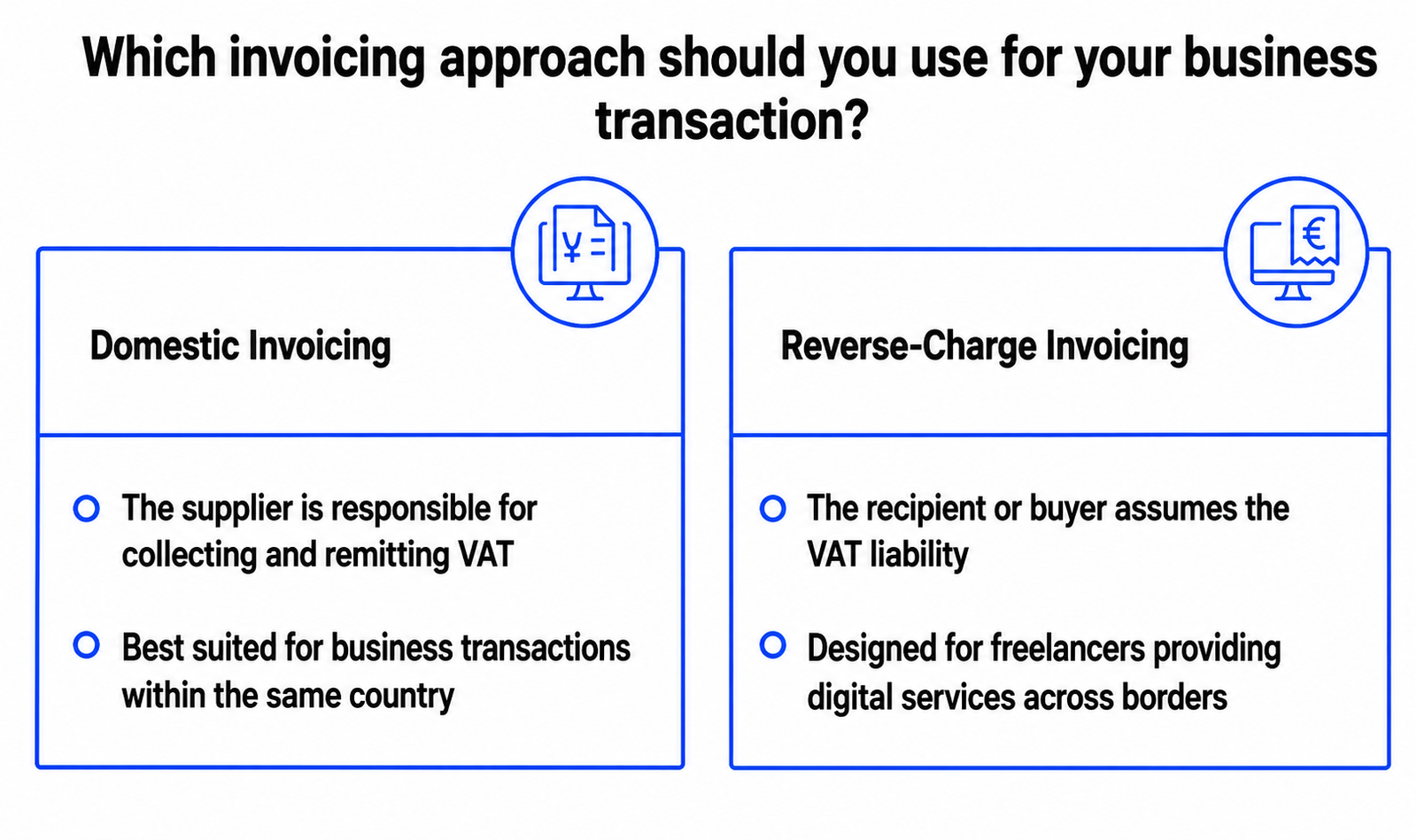
The simplest way to define VAT is as the tax responsibility that is placed on the recipient (or buyer) instead of the supplier (or seller) in specific types of international business transactions.
In these particular cases (and only in these instances), VAT should not be charged on the invoice. Instead, it often has text that states the reverse-charging mechanism will apply.
When providing digital services across borders for many freelancers, this is often the scenario.
A designer can invoice a business in a different country from where he designs. The client pays the VAT locally and is not charged directly.
That's why sometimes, common invoice templates come with issues. An environment that's ideal for domestic clients could end up being everything but ideal for international transactions.
If you know how to spot these situations, you will be less likely to encounter unexpected consequences in the future.
Why Currency Matching Matters More Than Most People Realize
People often don't realize how important it is to have a perfect match. As taxes aren't the only reason invoices get rejected.
Currency mismatches create problems far more often than many businesses expect.
Assume a contract is negotiated in U.S. dollars and sent in an invoice in euros, the amounts may appear equal. Yet, from a technical perspective, the client may require the invoice to be issued in the correct currency for their accounting system. Now:
- Someone will need to rework the exchange rates now.
- There needs to be somebody to check on the totalling.
- There has to be a person who gives an exception.
- Payment turns into a paperwork headache.
The power rule to adhere to is consistency.
Always, use only the currency agreed when supplying services where possible in the currency agreed upon and make it abundantly clear (such as placing $ by the currency in the invoice itself).
Extras such as this make life simpler for everybody involved.
Freelancers Face Different Compliance Challenges
Freelancers encounter numerous compliance problems that are unique to their situation. Freelancers have unique compliance challenges.
For larger companies, there will generally be finance departments checking before sending out.
Irregular income sources are not the typical offerings of freelancers.
The creator who creates a freelance invoice is generally going to be running the show from start to finish; he is going to be responsible for both the delivery of your project and the monitoring of payments. This can lead to a higher likelihood of errors if not executed properly or the chance of overlooking important details.
The first problem is to use an old invoice format that was designed a long time ago for local clients.
Once international projects come into the equation, more information may be needed. All of a sudden, tax registration numbers, business addresses, currency, and client tax data come into play.
Invoice templates that worked fine with local work just might be inadequate.
Therefore, freelancers should always keep checking their invoice regularly to ensure that it is suitable for different clients instead of taking it for granted that the template is perfect to suit every client.
Choosing the Right Tax Invoice Template
When selecting a tax invoice template, you will need to take into account several factors.
There are various kinds of invoice templates.
Some are created to support straightforward local deals. Others include complex functions like VAT calculations, multiple currencies, and other compliance fields.
A solid tax bill template ought to give you the variation you want, instead of being rigid and structured.
International customers tend to have other expectations! Purchase order reference numbers might be needed by one company. An additional may need tax identification numbers. A third may ask for instructions on payment in detail.
Flexibility matters.
The most suitable templates align with the transaction instead of the transaction conforming to the template.
The Hidden Risk of Editable Documents
This is a relatively infrequently discussed problem.
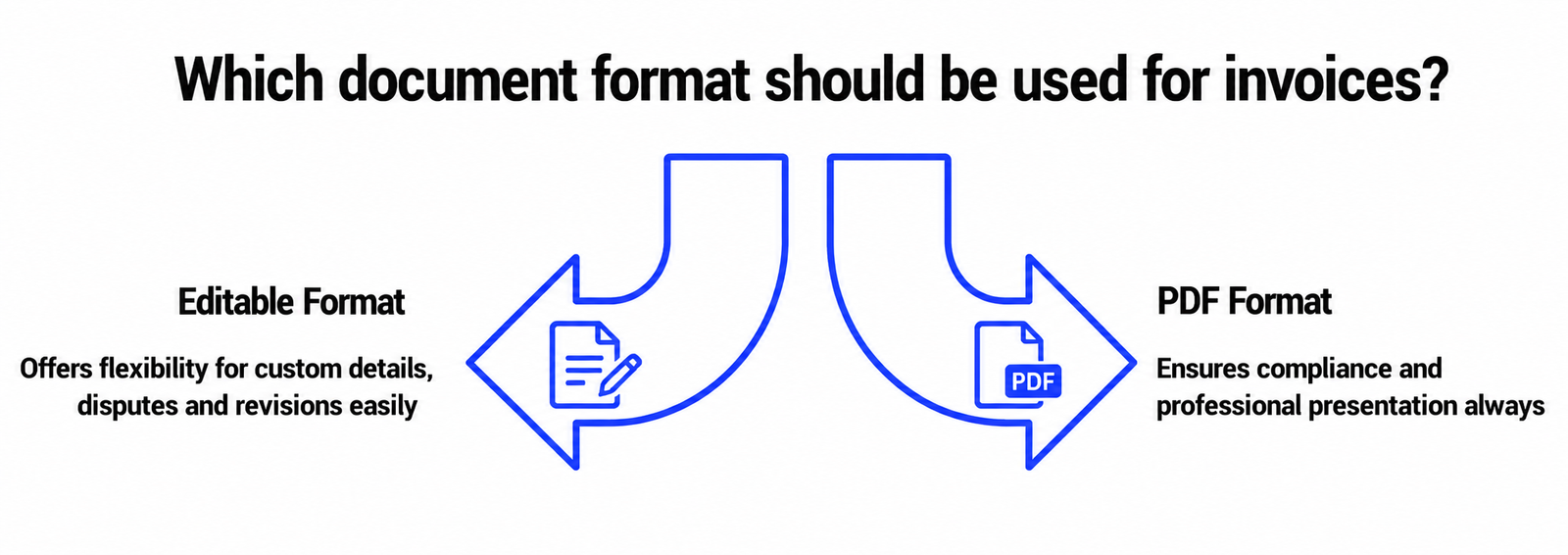
Numerous businesses continue to drop invoices as editable files.
While this may sound like a good idea, it is easy to accidentally mess or alter a document, or to have a different version that can lead to version confusion.
Think of a finance buff looking at your invoice and realizing that the fonts needed to change, the totals migrated, or even how the data was formatted.
The information could be factually correct, but the document loses its professional appearance.
However, PDF invoices reduce most of these problems as the document is constant and will look the same no matter who views it.
The recipient gets precisely what you meant to give!
This consistency is especially useful if compliance information needs to be easily visible and consistent.
Using the right tools to make Compliance Easier
It is possible to manually create compliant invoices.
Also, there is an easy way to forget something.
Once businesses start doing business with foreign clients, billing easily becomes more complicated. You have to handle various currencies, VAT rules, tax fields, and reporting needs correctly.
Where a complimentary invoice generator can be used to streamline your process.
Rather than fiddling with your invoices line by line every time, companies can build documents that are structured, personalize currencies, incorporate tax details, and set up professional PDFs in minutes.
It's not just for the sake of invoice automation.
The aim is to minimize the risk of error and keep up a professional level that the international client would expect.
Keeping it consistent makes it a huge benefit for enterprises engaged in frequent cross-border transactions.
Conclusion
The word "memorizing" doesn't apply to creating Tax-Compliant Invoices worldwide. It's understanding what information the client, accountants, and financial systems require to accurately process transactions.
Clear messages are the strongest messages you'll have in the invoices. They clarify who is being paid, their tax status, the correct currency, and precisely report what was paid. The presence of these elements makes payments quicker and compliance a lot easier to deal with.
A knowledge of the importance of structure makes all the difference whether you need to put together a VAT tax clearance document, update a freelance invoice template, or prepare documents for overseas clients. When you can tailor up your tax fields, add in different currencies, and send out PDFs that look pro, it's really not hard to keep your business compliant.
Most invoice problems don't start with the work you delivered; they start with a document that was missing one small detail.
Before sending your next invoice, make sure it's built to meet client expectations from the start. With PDF Invoicing, you can create clean, professional invoices that are easier to process, easier to track, and easier to get paid on.
Try PDF Invoicing and make your next invoice the one that gets approved the first time!
Frequently Asked Questions
1: What is a VAT invoice?
A VAT invoice is a legal document that records a sale and shows the applicable Value Added Tax (VAT) charged on goods or services. It typically includes invoice details, tax registration numbers, VAT rates, tax amounts, and the total amount payable.
2: What are the VAT invoice requirements?
A compliant VAT invoice generally includes the seller's and buyer's details, invoice number, invoice date, description of goods or services, VAT registration numbers, applicable VAT rate, tax amount, subtotal, and total payable amount. Requirements may vary by country.
3: What is a tax invoice and its purpose?
A tax invoice is a document issued by a business to request payment while providing proof of a taxable transaction. It helps businesses, clients, accountants, and tax authorities verify sales, calculate taxes, and maintain accurate financial records.
4: How can I generate a tax invoice using online accounting software?
Online accounting software allows you to create professional tax invoices by adding business details, client information, tax rates, currencies, and payment terms. You can also generate secure PDF invoices that simplify compliance and reduce invoicing errors. Create compliant invoices quickly with PDFInvoicing.com
5: What are the best platforms for creating and managing electronic invoices?
The right invoicing platform should support tax compliance, VAT fields, multiple currencies, PDF exports, and international billing requirements. For a simple way to create, manage, and share professional electronic invoices, try PDFInvoicing.com and streamline your invoicing workflow.