
Partial Payment Invoice Guide: How to Record Deposits, Advances, and Balance Due
2026-06-03
Introduction
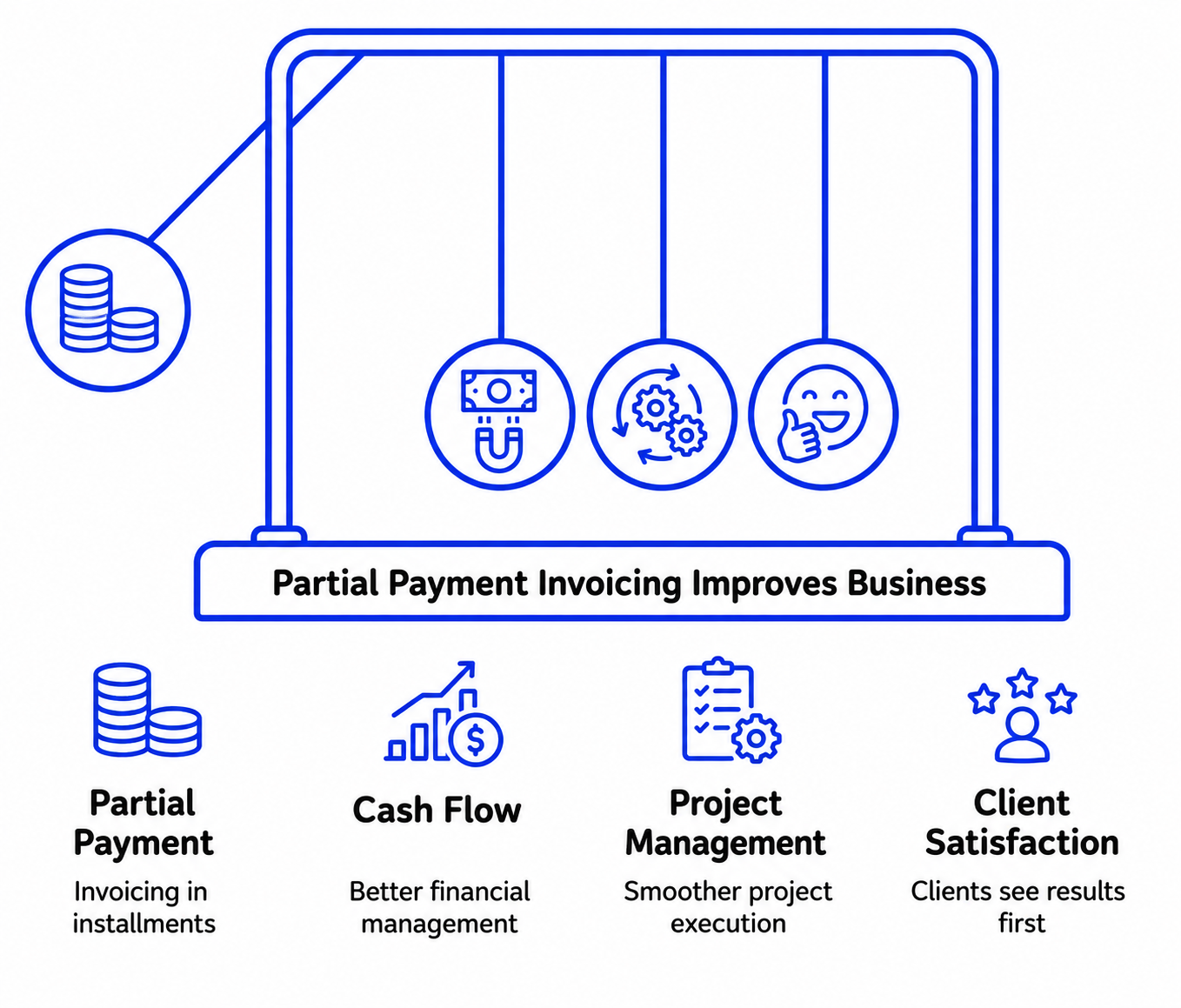
Partial Payment Invoices are no longer limited to large corporations or complex agreements. Freelancers, agencies, consultants, contractors, and service businesses are increasingly adopting partial invoicing to enhance project management today. Previously, organizations would delay payment requests until the end of a project, but they now split the bill into portions: deposits, advance payments, and final balance settlements. This method helps to enhance cash flow, minimize financial risk, and establish a more manageable payment system for businesses and clients.
However, there are issues with partial invoicing if it is not done correctly. Businesses often find it challenging to accurately document deposits, properly update outstanding balances, or manage payments at different stages of an invoice. If a calculation error or a lack of clarity about the balance due occurs, it can delay payments and impact the client's trust. That's why the use of digital invoicing and cutting-edge e invoicing software has been gaining momentum over the last few years.
Invoices can now be tracked, staged payments can be managed, and businesses are no longer dependent on manually edited spreadsheets or disconnected records to produce new invoices with the aid of an invoice generator, invoice maker, or automated billing system. This guide will explain what partial payment invoicing entails, how it works, how to set it up professionally, and how modern digital invoicing tools make it easy and enhance payment uniformity.
Why Partial Payment Invoicing Has Become Standard in Modern Business
Over the previous decade, the customer invoicing process has evolved considerably. Older invoicing techniques were suitable for simple and brief transactions. Services were completed, invoices were issued, and payments were typically received without delay.
This approach no longer reflects how most modern projects are managed.
Today, businesses often work through project phases, milestones, and long-term partnerships. In such cases, waiting until the end of a project to issue a full invoice can create unnecessary financial pressure for both parties. Milestone-based invoicing provides better cash flow and supports smoother project management.
A marketing agency cannot stop cash flow in the last month when the six-month marketing campaign is underway, for instance. Similarly, many clients don't like to pay the full price until they see results.
There is a balance between these two realities when the accounts are issued in part. Funds are not disbursed from the project but rather follow the project.
That's why partial invoicing is now commonplace in several industries, such as:
- Consulting and coaching.
- Construction and renovation.
- The development of web pages and software applications.
- Custom production and manufacturing.
- Freelance creative services.
- Planning and producing events and media.
From an idea that seemed like a nice "bill as you go" concept, it has become a fundamental part of business.
Understanding Deposits, Advances, and Balance Due Amounts
These words are often used as synonyms, but they are different components of the payments process. Knowing the difference is important since invoice clarity has a direct impact on faster payment speed and client confidence.
Deposit Payments
Typically, a deposit payment is taken before the commencement of work. It is used for commitment primarily. It ensures the booking, reserves project time, or verifies that the client is going to move forward.
For instance, a designer might want to see a 30% payment upfront before starting to work on brand development.
Deposits also help lower the business's financial risk, ensuring the client has invested from the outset.
Advance Payments
The advance payments are a little bit different. Except in general, they are not necessarily exclusive to the act of reservation, but rather linked to operational requirements.
Contractors or manufacturers who buy raw materials or start production can ask for an advance payment, which is a lump sum payment that is made to cover the initial costs of the project. In services, advances can be used to facilitate resource allocation before delivery.
There is sometimes a blurring of these two terms, but not always with a similar purpose.
Balance Due
Balance due is the amount of the debt that has not yet been paid.
This may seem straightforward, but a lot of businesses don't do a good job of displaying it on their invoices. Remaining balances should never have to be calculated by the client. When creating an e invoice, a professional invoice clearly states:
- Total project amount.
- Payments already received.
- Outstanding amount remaining.
- Payment due date.
The financial presentation is clear, which helps to avoid confusion and expedites approvals.
Why Businesses Struggle With Partial Payment Invoices
Creating the first invoice is the biggest problem with partial invoicing. Issues typically start when several payments, revisions, or project changes are added into the mix.
A deposit is accepted for a business. Later, the scope of the project was expanded. The other payment is taken at the halfway point of delivery. After that, a new invoice is issued, but old payments are not properly accounted for.
From this point, visibility is lost for both sides.
This gets worse when the invoicing is done manually. When businesses are using spreadsheets or using duplicated templates, they will most likely be generating uncoordinated versions of the invoice that do not have identical balances. It is hard to keep track of payments over time.
It's something that clients notice in no time at all. As soon as the invoices look inconsistent, there is a loss of faith in the billing procedure.
This is one of the reasons why businesses are shifting towards e invoicing software and Digital Invoicing Systems that will keep updated records of payments.
How Digital Invoicing Improves Partial Payment Tracking
Digital invoicing has transformed the way invoices are done from paper to real-time financial processes.
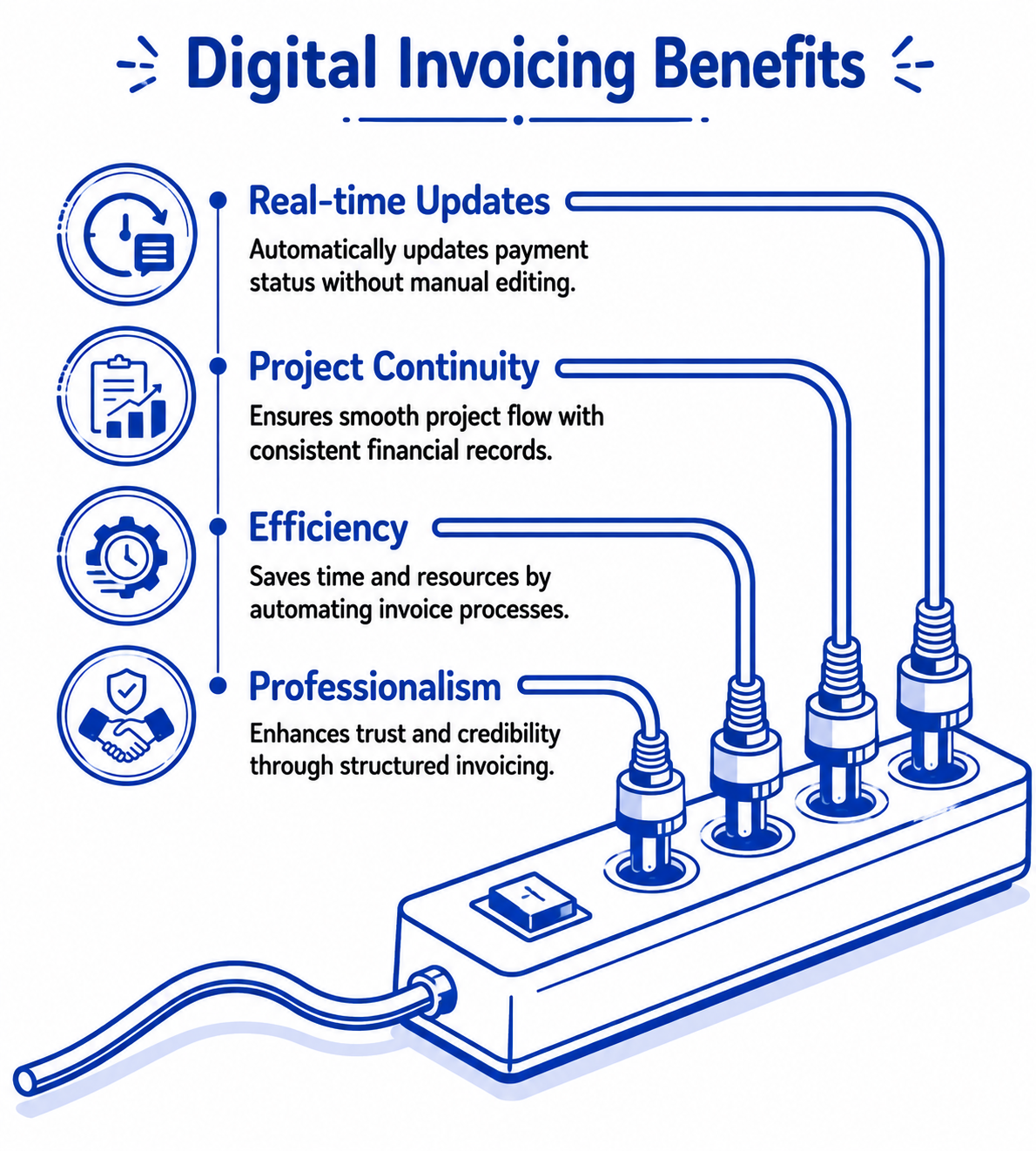
In the case of a business that uses an invoice generator system, it can automatically update the deposit, advance, and outstanding balance for each deposit, all within the same invoice template, without manually editing the bills after every payment.
This will ensure continuity throughout the project lifecycle.
Let's say a web development agency is dealing with milestone payments; they can create new invoices instantly that include all of the following:
- Initial deposit received.
- The mid-project payment provision was finalized.
- Remaining balance outstanding.
In the absence of digital invoicing systems, companies can waste valuable time manually reconciling their accounts or correcting invoice errors after invoices have been sent.
The efficiency is important, but so is the professionalism even more.
Structured invoicing fosters trust.
How to Record Partial Payments Properly
A professional partial payment invoice should be easily understood right away. No client should have to ask how much money has been paid or how much is still outstanding.
Businesses do not understand the importance of the structure.
Clearly indicate the total project amount at the top of the invoice. Following that, list all payments received individually, rather than combining them into a nonspecific deduction.
For example:
Project Total: $8,000
Deposit Received: $2,000
Second Payment Received: $3,000
Balance Due: $3,000
This allows a path or sequence of payments to be seen, rather than having to work out figures for themselves.
It's also important to carefully update invoice dates at all stages of payments. One of the quickest ways to confuse is by sending dated and unbalanced invoices.
Why Invoice Clarity Affects Payment Speed
Many companies tend to think that delayed payments are due to the fact that their customers are slow. Actually, when invoices are not clear, they are a part of the problem.
If a client receives an invoice that seems incomplete or confusing, he or she will most likely freeze on making the payment until further clarity is established within the client's organization. Any doubt can push an invoice to the next cycle of payment.
For this reason, businesses that are utilizing structured invoice maker systems are likely to receive faster payments. The invoice eliminates friction in the approval process.
The only question a clear invoice may seek to answer is what was missing.
That's a distinction that most businesses don't take into consideration.
The Role of E Invoicing Software in Financial Accuracy
The more complex the projects, the less reliable manual invoice handling is.
Recent e invoicing software has solved this issue by automatically calculating the figures and keeping the payment documents updated. Businesses no longer have to manually update balances after each transaction.
It is automatically taken care of by the software.
This substantially diminishes problems like:
- Duplicate invoice versions.
- Incorrect outstanding balances.
- Missed payment records.
- Calculation errors.
Automation creates consistent operations, providing a significant benefit for companies managing multiple clients or large projects, a task that spreadsheets would struggle to handle effectively over time.
How to Generate Invoice Records More Efficiently
When looking for ways to produce invoice records professionally, businesses tend to concentrate just on the design or formatting. In fact, invoice structure is more important than just looks.
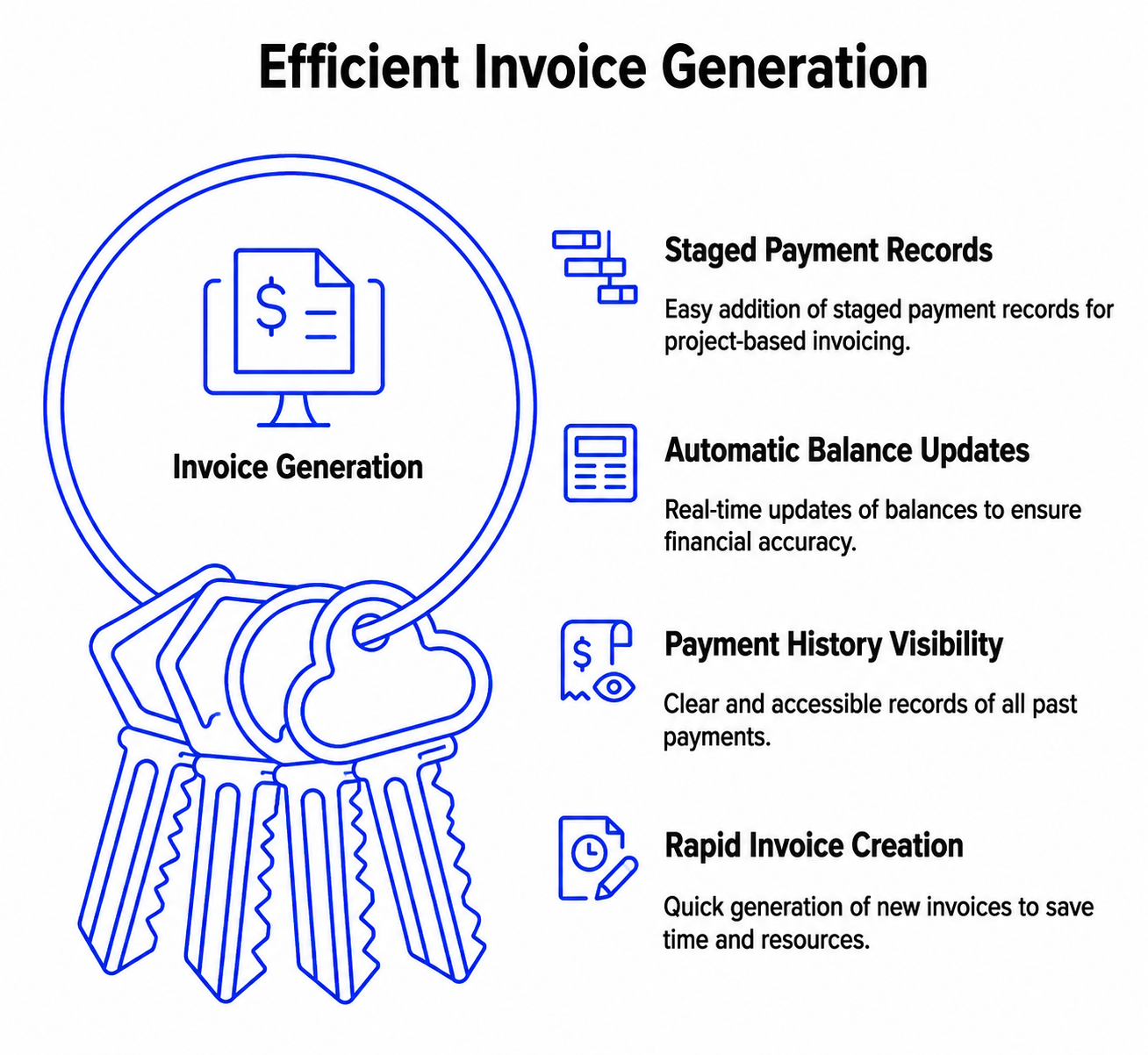
A good invoice generator must enable companies to:
- Staged Payment Records are added easily.
- Update balances automatically
- Maintain payment history visibility
- Create new invoices in no time.
This is particularly useful for companies that are dealing with continuous projects in which invoices change as time passes.
For smaller businesses, a free invoice generator may suffice; however, larger companies might benefit from more advanced digital invoicing systems that include payment tracking and automation features.
It's not just about making your invoices quicker. It generates and delivers invoices that are financially accurate throughout the entire project cycle.
Common Mistakes Businesses Make With Partial Payment Invoices
The most common error companies make is not communicating expectations of payments from the outset.
Clients should understand:
- Payment stages.
- Due dates.
- Deposit terms.
- Final billing condition.
- Before work begins.
Another problem is that invoices are not formatted consistently. Clients may not be able to track payments on a project, as businesses change the layout of their invoices many times.
Some companies also do not provide an update to your invoices after receiving payment. This raises concerns about existing positions and obligations.
These errors are trivial on their own, but add up to make payment cycles much longer.
Why Partial Payment Invoicing Improves Cash Flow Stability
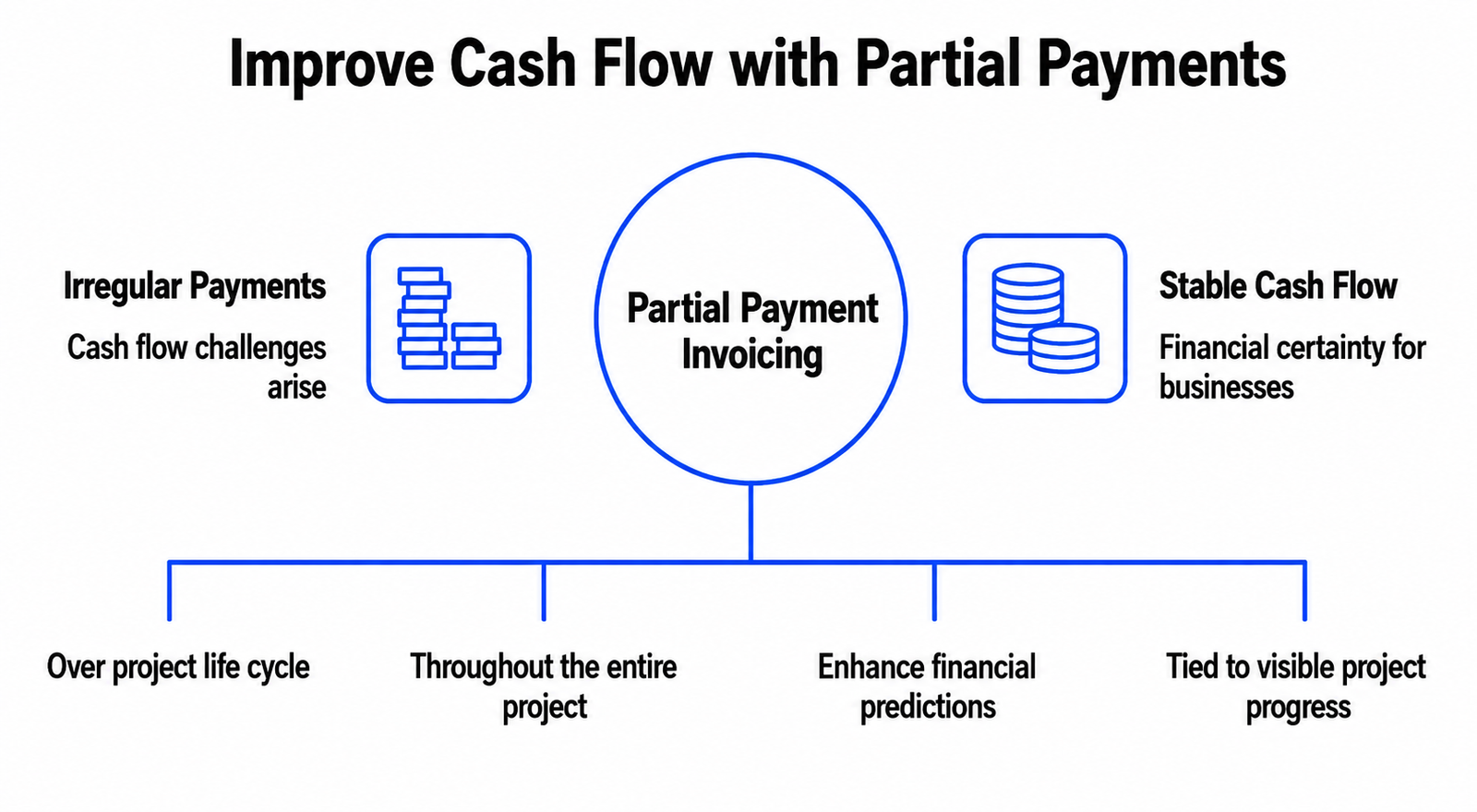
Cash flow challenges usually do not originate from businesses lacking revenue. In most cases, they occur due to insufficient regularity of payments.
The solution is to use partial payment invoicing, which breaks payment down over the project's life cycle.
Rather than waiting for the completion of the business, the companies sustain the cash flow throughout the entire project. This reduces operating stress and enhances financial predictions.
This is particularly beneficial for freelancers and small businesses, giving them a greater level of financial certainty.
Clients benefit too. When large payments are broken down into stages of logical work that are tied to the visible project progress, these payments seem more manageable.
Simplifying Partial Payment Management With PDF Invoicing
As projects increase, it becomes challenging to manage multiple deposits, revised balances, and staged payments without automation. In the business world, it is common for companies to spend hours updating spreadsheets, reconciling invoice calculations, or monitoring multiple versions of invoices that are out of sync.
PDF Invoicing offers businesses the ability to generate professional partial payment invoices, accurately track deposits, automatically update outstanding balances, and have digital invoicing in place from one location.
Rather than having to manually revise invoices, companies can keep their billing records organized, and clients will have a better payment experience.
The Growing Shift Toward Partial Payment Invoicing
Partial payment invoicing is developing along with the wider trends in financial technology.
Invoicing systems are now expected to seamlessly connect with payment platforms, accounting software, and automated processes, particularly in the modern business landscape. In a lot of industries, paper invoices and manually modified paperwork are already becoming obsolete.
E invoicing software is getting more intelligent, too. Reminders are now automated, recurring invoices can be created, and real-time payment activity can be tracked.
This change is important because invoicing is no longer considered a task of administration. Now it's an integral part of the overall client experience that a business offers.
The businesses that are modernizing their invoicing are setting themselves up for quicker and more efficient financial processes in the future.
Conclusion
A Partial Payment Invoice is not just a document that asks for payments in installments. It's a financial model that allows for a healthier cash flow, better client communication, and more successful project management.
Correctly recording deposits, advances, and balance due amounts smooths the process of invoicing for all parties involved. Clients have a clear understanding of their payment, businesses can have a clearer view of their finances, and late payments are reduced.
While digital invoicing and e invoicing systems are slowly succeeding the traditional paper-based processes, taking the plunge to modernise the invoicing process will yield a host of benefits beyond efficiency. They will develop billing systems that are structured, transparent, and more trustworthy for the client.
And in modern business, trust often fast-tracks payments as much as the invoice.
Ready to simplify partial payment invoicing and eliminate manual tracking? Create professional invoices, automatically manage deposits and balances, and streamline your billing process with PDF Invoicing.
Start using PDF Invoicing today and give your clients a faster, clearer, and more professional payment experience!
Frequently Asked Questions
How do I create a partial payment invoice that clearly shows deposits, advances, and remaining balance?
A professional partial payment invoice should clearly display the total project amount, all payments received to date, and the remaining balance due. Deposits and advance payments should be listed separately rather than combined into a single deduction, allowing clients to easily track what has been paid and what remains outstanding. Including the balance due and payment deadline further improves clarity and reduces the likelihood of payment disputes or delays.
What’s the best way to record and reconcile multiple partial payments in my accounting?
The best way to manage multiple partial payments is to maintain an accurate, up-to-date payment history and update outstanding balances after every transaction. Using digital invoicing or e-invoicing software can automate this process by recording deposits, advances, and milestone payments within the same invoice record, helping businesses avoid manual reconciliation errors while maintaining complete financial visibility throughout the project.
What common mistakes should I avoid when issuing partial payment invoices?
Businesses should avoid failing to communicate payment terms upfront, using inconsistent invoice formats, neglecting to update invoices after receiving payments, and manually tracking payments through disconnected spreadsheets. These mistakes often create confusion about outstanding balances, make payment tracking difficult, and can ultimately slow down approvals and damage client trust in the billing process.
How can I make partial payment invoices easier for clients to pay and approve?
To make partial payment invoices easier for clients to approve and pay, businesses should ensure that every invoice clearly shows the total project value, payments already received, the remaining balance due, and applicable payment deadlines in a consistent format. Clear, transparent invoices reduce confusion, speed up internal approvals, and help clients confidently process payments without requesting additional clarification. Businesses can further streamline the process by using PDF Invoicing, which enables accurate tracking of deposits, automatic balance updates, and professionally structured digital invoices that create a smoother payment experience for both clients and businesses