
Step-by-Step Guide to E-Invoice Billing Benefits
2026-04-06
Introduction
Products and services are no longer the sole determinants of customer experience. It is affected by all transactions a business makes with its clients, such as billing. It is here that the e-invoice is lowering expectations. Tasks that were once assumed to be handled by the back office are now included in the customer journey process, which influences the ease of transacting business and the professionalism of a business to do business with.
Billing is becoming quicker, more transparent, and dependable as companies are implementing digital invoicing and automation. Customers are not interested in going after invoices, inquiring about ambiguous payments, or waiting days before confirmations. They desire an easy and foreseeable process. E-invoice billing can ensure that a business does not make an extra effort to meet that expectation.
How Does Billing Impact Customer Experience?
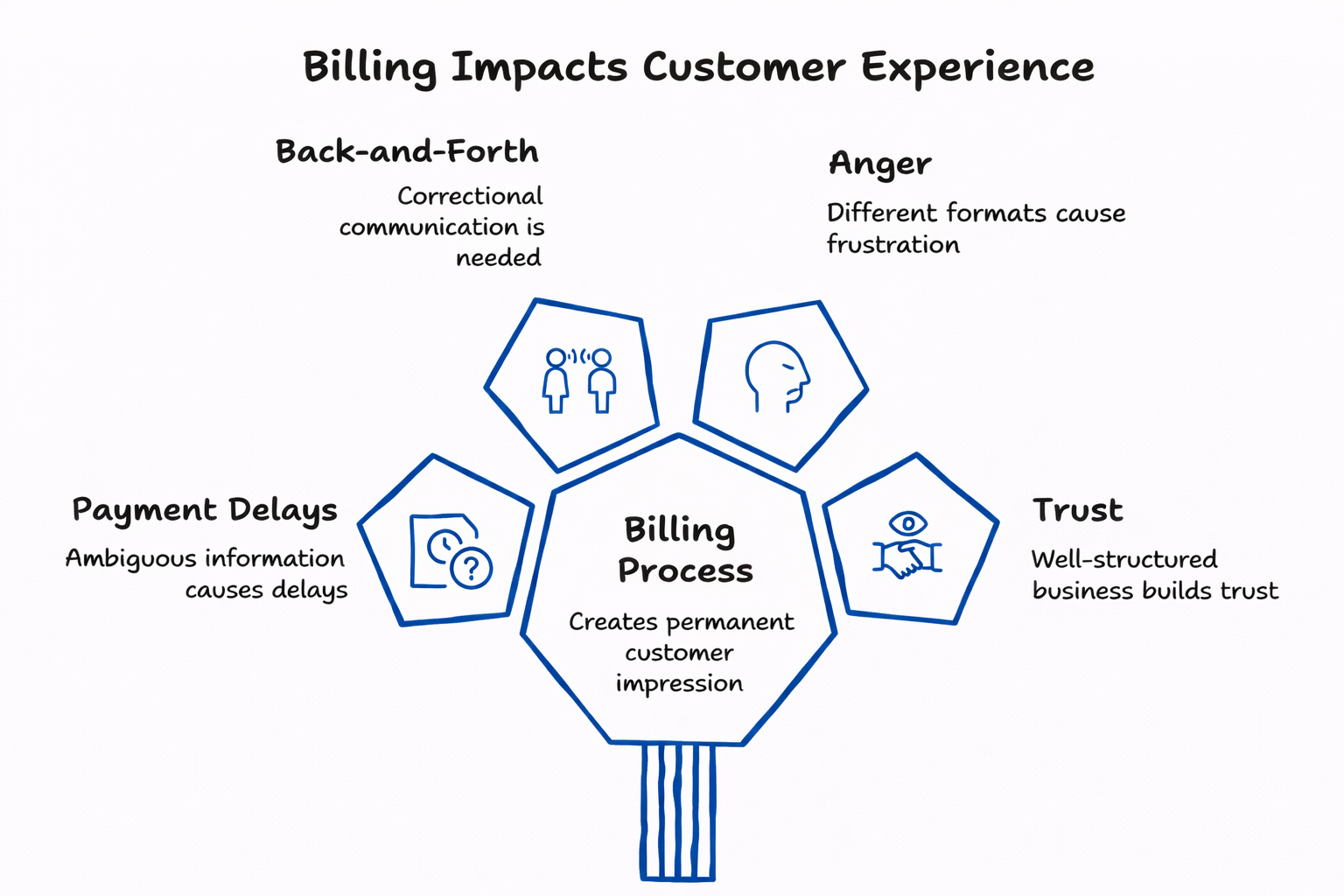
Billing is not often the first point of contact in the transaction. It creates a permanent impression, either good or bad.
Put yourself in the position of a client. They are already contracted to a service or product. They now get an invoice, which is either simple and quick to process or complicated and slow. This is what will create their perception of the whole experience.
Inadequate billing may result in:
- Payment delays because of ambiguous information.
- Correctional back-and-forth communication.
- Anger due to different formats.
Conversely, a properly designed payment invoice creates trust. It is an indication that the business is well-structured and trustworthy. This is where the electronic invoicing comes into play.
Understanding E-Invoice Billing in Simple Terms
An e-invoice is not only a digital document. It is a computerized electronic invoice that can be generated, transmitted, and automatically processed across systems.
It is a digital invoice processing tool, unlike a simple file attachment. It implies that the information contained in the invoice can be read and processed by software without inputting it manually.
Practically, this permits:
- Faster invoice creation
- Immediate delivery
- Automated authentication of information.
- Status tracking in real-time.
The whole process is smoother when invoice automation is added to it. Manual invoice work is minimized, and invoice generation or an online invoice maker allows businesses to create invoices.
Elevate Customer Experience with E-Invoice Billing
Customer experience is one of the issues that is underrated in the context of the e-invoice systems. It is not merely a matter of efficiency on the business front. It has a direct impact on the way customers deal with the company.
Clarity and Transparency
Lack of clarity is one of the most frequent complaints about traditional billing. Clients can have difficulty comprehending line items or how totals were computed.
Digital invoicing resolves this by making the formats consistent and having all the relevant information included. All invoices have a standardized format, which customers can find easier to read and accept.
Faster Communication
In the case of e-invoice systems, invoices are sent immediately. Delayed emails and waiting on physical documents are not part of it.
In case a customer requires an explanation, the information can be easily accessed. This saves time on back and forth and makes the process flow.
Reduced Errors
Billing errors are the worst things that can interrupt customer experience. Uncorrect sums or a lack of information can hurt credibility.
These risks are minimized in invoice automation because of the ability to access the data from a credible source and perform validation checks on the data before invoice issuance.
The Role of Digital Invoice Processing in Customer Satisfaction
Online invoice work facilitates consistency and reliability. In a manual invoice system, variation is created in every step. An employee could format an invoice in a different way from the others, or minor details can be ignored.
This inconsistency is eliminated by automated systems. All invoices are subject to the same regulations, and they are accurate and comprehensive.
To the customers, this implies:
- Fewer surprises on checking invoices.
- Faster approvals
- Less requirement to call support to get clarification.
In the long run, such consistency instills confidence. This is because customers are aware of what to expect, hence making the whole interaction easier.
From Manual Billing to Seamless Experiences
The difference between traditional and automated workflows can be better understood by comparing them.
When invoicing, there can be several steps in a manual setup. Information is gathered, input into templates, checked, and subsequently dispatched. Every one of these is time-consuming and requires human input.
As the process is automated with e-invoices, it becomes smooth. The system will automatically generate the invoice once a transaction has been made. The predefined approval workflow is possible, and the reminders are sent automatically.
Take the example of a service-based company that bills clients on a monthly basis. In the past, invoices could be delivered late or with minor inconsistencies. Since the digital invoicing, invoices are created at the right time and with the right details each time.
On the side of the customer, it would be a predictable and stress-free experience.
How Tools Like Invoice Generators Improve Interactions
The adoption of simple tools such as an invoice generator or an online invoice maker is the initial step towards improved billing in the case of many businesses.
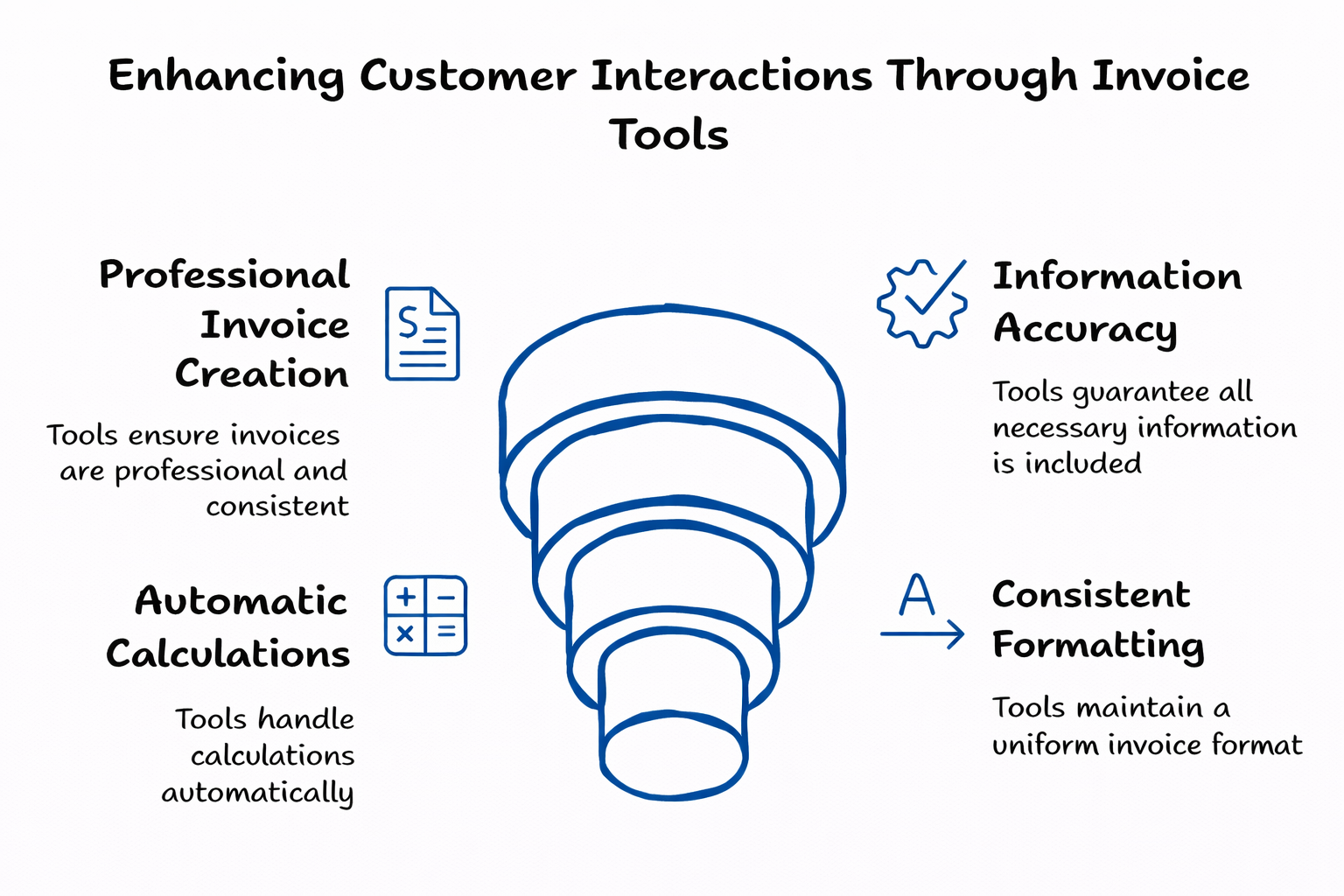
The tools will assist in making professional and consistent invoices without having to use a complex system. They ensure that:
- Every necessary piece of information is provided.
- Automatic calculations are processed.
- Formatting remains consistent
In the case of small businesses, this may go a long way in enhancing customer perception of their business. Professionalism and attention to detail are reflected in a clean and accurate invoice.
These tools form the basis of improved customer interactions even in the absence of complete automation.
The Impact on Payment Speed and Trust
Engineer experience is directly related to the ease of accomplishing a transaction. In case of a slow or ambiguous billing process, there is a delay in payment.
E-invoice systems enhance this by ensuring invoices are simplified to read and handle. They are delivered immediately to customers, and they are able to take action without misunderstanding.
This leads to:
- Faster payments
- Fewer disputes
- Better business-customer relationships.
Customers who are assured of the billing process will more likely have a long-term relationship with the company.
Personalization and Professionalism in Digital Billing
The possibility to personalize invoices is one of the benefits of digital invoicing that is easily overlooked.
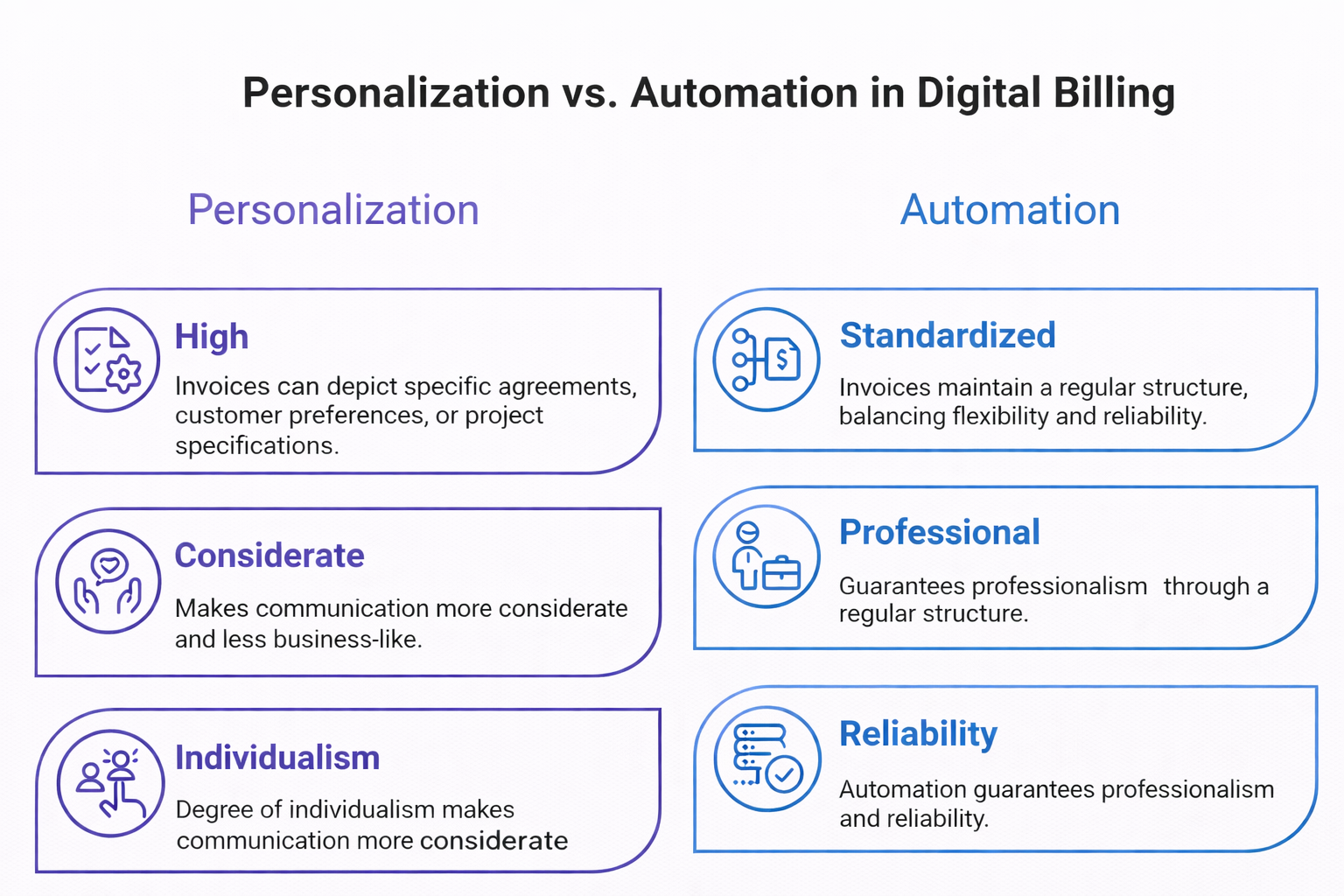
Companies are able to customize payment invoices to depict certain agreements, customer preferences, or project specifications. This degree of individualism makes the communication more considerate and less business-like.
Simultaneously, there is the issue of automation that guarantees professionalism. Customized invoices also include a regular structure, which balances between flexibility and reliability.
What Are the Common Challenges in Customer Experience?
Though e-invoice systems address most of the issues in billing, companies might experience difficulties during the transition.
Adjustment Period for Customers
There are clients who might be accustomed to the conventional ways of invoicing. The implementation of digital systems needs to be communicated well in order to have a smooth transition.
System Integration Issues
Even though invoicing systems should be effectively combined with other tools, it is possible to have inconsistencies. This is able to influence the experience.
Over-Automation Without Clarity
The automation must not be at the expense of clarity. In case invoices are too technical or hard to read, it may become confusing to the customers.
These issues need a moderate resolution that puts the customer experience at the heart of it.
How Businesses Can Use E-Invoice to Build Better Relationships
Efficiency is not the only way to improve billing. It is regarding building relationships with customers.
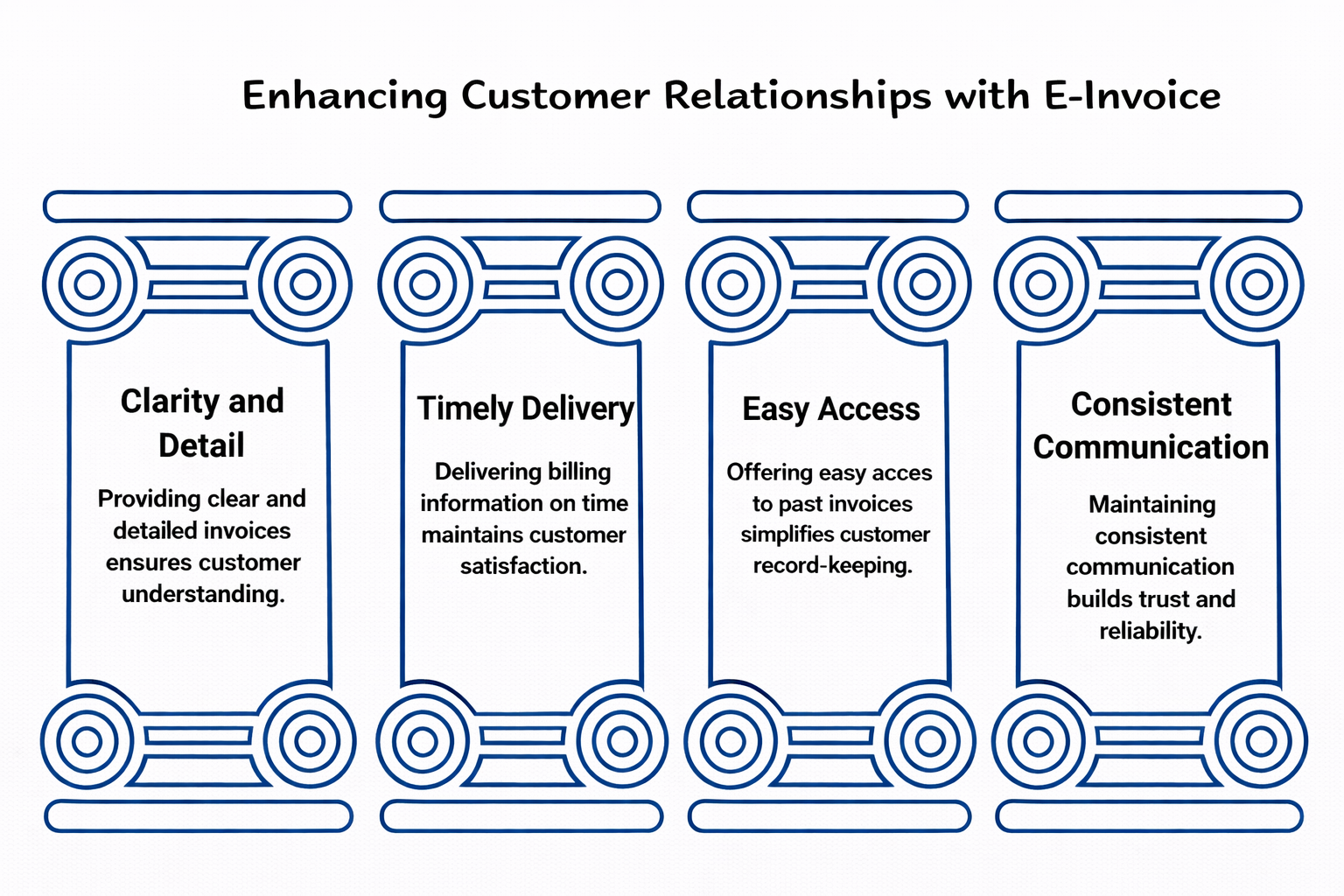
Businesses can use e-invoice systems to:
- Offer very clear and detailed invoices.
- Deliver billing information in time.
- Offer easy access to past invoices
- Maintain consistent communication
Such little additions make communication easier and business-like. In the long run, they lead to an enhanced feeling of trust.
The Future of Customer-Centric Billing
The expectations of the customers will keep on rising as the businesses keep changing. There will be a need to streamline billing processes.
E-invoice systems will probably be more integrated with other customer-facing tools. This may involve real-time payment updates, automatic notifications, and a more interactive invoice format.
It will not only be about the delivery of invoices but also the establishment of a smooth financial experience.
Businesses that embrace this change early enough will be distinct not only in terms of efficiency but also in terms of ease in doing business.
Transform Your Customer Experience with E-Invoices
To companies interested in improving their billing procedure, a couple of practical steps might result in a recognizable change:
- A reliable invoice generator is important to use.
- Make invoice forms simple and understandable.
- Automate repetitive processes without losing focus.
- Be able to communicate changes to customers.
- Track the feedback and make adjustments.
These measures will serve to make sure that technology will facilitate the customer experience and not make it more complex.
Conclusion
Billing might appear as a minor component of the business process, but it has a huge bearing on customer perception. A hassle-free, precise, and clear invoicing process can build trust, whereas a disorganized invoicing process will cause friction.
E-invoice billing is a feasible method of enhancing this experience. With digital invoicing, automated billing, and structured data, the businesses will be able to develop efficient and customer-friendly processes.
It is not only about time-saving or the cut of errors but also about the feeling of smoothness during any interaction. For enterprises that are interested in developing closer relations and becoming distinguished in the competitive market, enhancing billing with the help of e-invoice systems is a clever and significant step to follow.
Curious about what tools are available for creating and customizing e-invoices with payment integration?
E-invoice billing removes errors, delays, and confusion, making your billing clear, fast, and reliable. It helps you create accurate invoices, get paid quicker, and build customer trust.
With PDF Invoicing, you’re not just sending invoices, you’re solving billing problems with smarter, simpler tools.
Sign up to PDF Invoicing today and make your billing effortless.
Frequently Asked Questions
1. How Does E-Invoicing Improve Customer Experience?
E-invoicing enhances customer experience by providing instant delivery, clear formats, and real-time tracking, eliminating delays and confusion from manual billing. Customers appreciate fewer errors and automated processing, leading to faster payments and higher trust, as seen in streamlined workflows that reduce back-and-forth communication. This aligns with the blog's emphasis on transparency, turning billing into a positive touchpoint.
2. What Are the Key Benefits of Digital Invoicing for Customers?
Key benefits include error-free invoices through automation, consistent formatting for easy understanding, and immediate access to payment details, which boost satisfaction and loyalty. Unlike traditional methods, e-invoices cut processing time by up to 80% and enable self-service tracking, fostering professionalism and predictability in transactions. The blog highlights how this reliability minimizes disputes and surprises.
3. What Challenges Arise When Transitioning to E-Invoice Systems?
Common challenges involve customer adjustment to digital formats, system integration glitches, and over-automation that obscures clarity, potentially causing initial friction. The blog recommends clear communication and phased rollouts to ensure smooth adoption, mirroring real-world practices where training and feedback loops address these hurdles effectively. Proper handling prevents dips in experience during the shift.
5. What Is the Future of E-Invoicing in Customer-Centric Billing?
The future involves deeper integration with payment portals, AI-driven personalization, and real-time notifications, creating interactive, seamless financial experiences beyond just invoicing. As per the blog, early adopters will stand out by combining efficiency with proactive customer tools, supported by trends showing improved retention through such innovations. This evolution promises even stronger relationships via predictive, hassle-free billing.
6. What are the best tools for creating and managing e-invoices instantly?
Some of the best tools for creating and managing e‑invoices instantly include specialized platforms like PDF Invoicing that let you generate and track invoices almost immediately. PDFInvoicing.com offers free online invoice generators where you can quickly customize templates, download professional PDF e‑invoices, and streamline billing without registration‑heavy workflows.