
The Smart Choice: Why Companies Are Switching to E-Invoice
2026-02-28
In the current competitive business environment, firms are reconsidering the ways they are conducting their financial operations. The increased use of the e- invoice is one of the most obvious transformations. What was previously declared as the technical upgrade has now rapidly turned into a business strategy to enable businesses to get their payments faster, with fewer mistakes, and to maximize the operation of their business.
An e-invoice is not simply a computerized paper bill. It is a transition to more intelligent, networked systems that enhance the manner in which firms process billing. Small organizations to well-established ones are realizing that electronic invoicing enhances efficiency and helps organizations to grow long-term.
It would be wise to have a more in-depth discussion of why the traditional ways of invoicing are becoming obsolete and why digital invoicing is becoming smarter in the business of the modern world.
What Is an E-Invoice
Electronic invoicing, or an e- invoice, refers to a structured digital invoice that is developed, sent, received, and processed. A legitimate e-invoice electronically refers to an electronic invoice that is delivered via email, in contrast to a basic PDF sent through email that can be read and automatically processed by accounting software.
This well-organized form allows:
- Automatic data entry.
- Faster approvals.
- Smooth integration of the system.
- Real- time status tracking.
Electronic invoicing is associated with accounting software or enterprise-scale systems. After an invoice has been created, it is pushed through the workflow without human intervention. This minimizes the time wastage and enhances precision.
In plain words, digital invoicing is turning billing, which is a manual administrative process, into an efficient automated process.
Why Traditional Invoicing Is Becoming Outdated
The traditional invoicing process can be characterized by printing, mailing, manual authorization, and data duplication. Although this approach was successful in the old days, it does not augur well with the current high-speed business world.
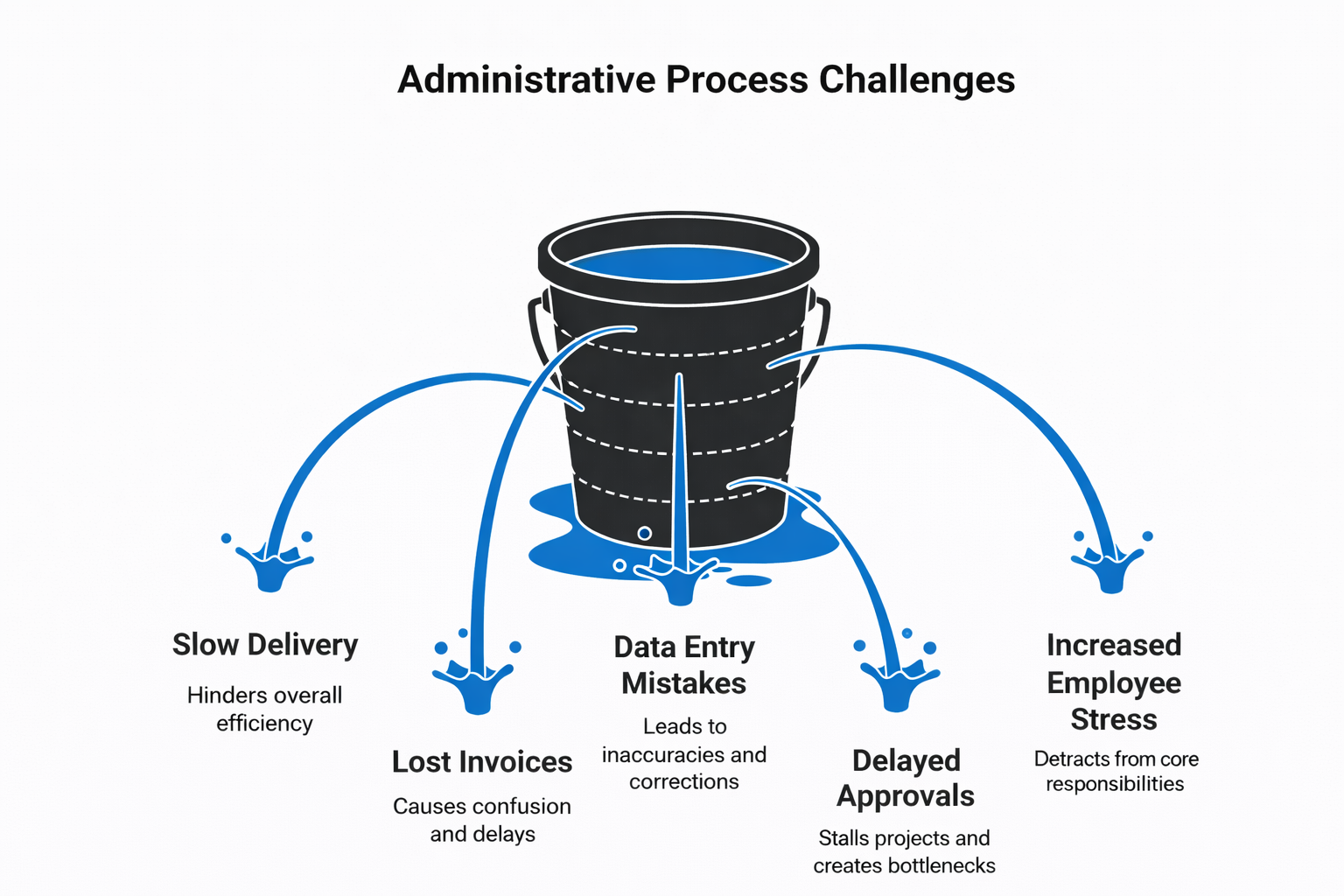
The paper-based systems usually result in:
- Slow delivery times
- Lost or misplaced invoices
- Data entry mistakes
- Delayed approvals
- Stress on more administrative work.
Mailing of (even email- based) invoices still involves manual input and follow-up. Time is wasted in finance teams fixing errors, monitoring payments, and disputes associated with wrong information.
The inefficiency of the manual handling of invoices is more evident as businesses start spreading across the world. Businesses require speed, transparency, and conformity. The conventional processes cannot provide such reliability.
The rising need to be accurate and compliant with regulations has increased the shift in the invoicing process towards being paperless.
Key Benefits of Switching to E-Invoice
The move to electronic invoicing is usually motivated by quantifiable benefits. Businesses exploring modernization often begin with understanding the fundamentals of e-invoicing benefits and the implementation process. Companies that move on tend to record gains on various fronts.
Faster Payment Cycles
The payment schedules become much better when the delivery of the invoices occurs instantly, and the invoice is automatically sent to the person in charge. Waiting to receive mail or a manual signature is eliminated.
Quick processing results in a healthier cash flow, which is vital to the continuation of operations and future development.
Greater Accuracy
Billing done manually raises the chances of error. Even a typing error can cause a postponement of payment for weeks. Automated billing systems are particularly effective because e-invoicing solutions reduce accounting errors and save operational time.
Digital invoicing systems mitigate this risk by automatically drawing data out of integrated systems and verifying data before submission. This minimizes disagreements and fosters trust among the clients and vendors.
Improved Transparency
A system that enables companies to track the status of invoices in real time is an e-invoice system. You are able to see when an invoice is dispatched, read, approved, and when to be paid.
Such visibility, of course, enhances communication and minimizes the needless follow-up emails.
Stronger Record Management
Documents on paper have the risk of being destroyed or lost. Electronic documents are well-maintained and can be recalled immediately whenever there is an audit or financial check. This makes compliance easier and time-saving.
How E-Invoice Improves Business Efficiency
Efficiency is not just time-saving. It is also entailed by decreasing interdepartmental friction and enhancing coordination of the work. Modern businesses are rapidly adopting structured digital billing systems to improve workflow efficiency.
Automation of Repetitive Tasks
Invoices can be created automatically repeatedly. Workflow approval is predetermined. The system does the computations related to taxes.
Finance teams will not be required to run after approvals or re-enter information. On the contrary, they will have time to concentrate on financial planning and analysis. Modern finance teams are moving toward automatic invoicing systems to eliminate manual workflow delays.
Streamlined Invoice Management
The invoice management systems are centralized, thus offering superior control of the accounts receivable and payable.
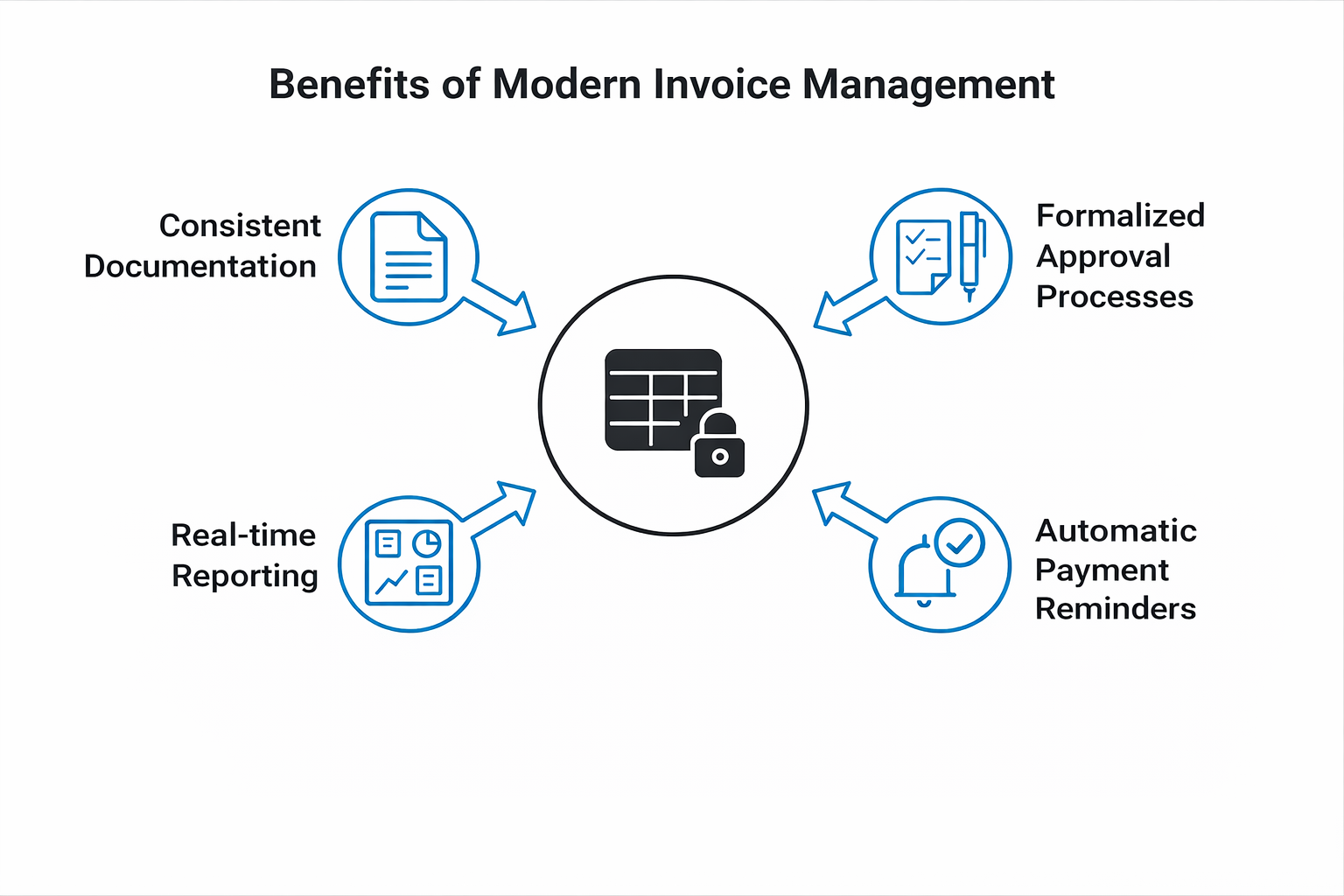
Businesses gain:
- Formalized processes of approval.
- Automatic payment reminders for late payments.
- Real-time reporting.
- Consistent documentation.
This method enhances decision-making and financial control.
Integration Across Systems
Many electronic invoicing systems are usually connected to accounting programs, inventory, and payroll systems. This removes repetitive data entry and ensures that there are no conflicting financial records within the company.
When systems are communicating, processes become easier and more successful.
Cost Savings and Environmental Impact
Cost reduction is one of the greatest reasons why it is better to switch to paperless invoicing.
Direct Financial Savings
Conventional invoicing involves the unseen expenses like paper and printing, postage, storage, and administrative labor. These costs are accumulated in the long run.
A lot of these recurring costs are done away with by the companies by switching to automated billing systems.
Indirect Operational Savings
The fewer errors, the fewer disputes and time wasted on solving problems. Quick payments ensure that less use of short term financing is used. Efficiency is enhanced, which puts a strain on the administrative teams.
In the long run, these savings greatly exceed the start-up cost of digital invoicing software.
Supporting Sustainability Goals
Environmental responsibility is also achieved by minimizing the use of paper. Most companies are striving to achieve sustainability. The process of switching to an e-invoice system minimizes waste and complies with corporate social responsibility efforts.
Environmental responsibility and digital transformation can proceed simultaneously.
Compliance and Security Advantages
Financial reporting regulatory requirements are getting complicated. In most jurisdictions, Electronic invoicing is now being encouraged or mandated by governments.
Simplified Regulatory Compliance
Technologies like the use of electronic invoicing systems usually have embedded tax computations and validation tests. They have detailed audit trails and ensure that they keep the records in a safe place.
This minimizes the chances of penalties and makes sure that the businesses comply with reporting standards.
Enhanced Data Security
The digital invoicing systems of today make use of encrypted transmission of data, secure cloud storage, and user access control.
Structured electronic systems can offer more protection against fraud and data breaches in comparison with paper files or unsecured email attachments.
The issue of security and compliance is no longer optional. They are the key elements of responsible business management.
Industries Rapidly Adopting E-Invoice
Even though adoption is diffusing in industries, some industries are changing speedily.
Manufacturing and Distribution
Automated billing is virtually inevitable given the high volumes of transactions. Increased speed in processing invoices enhances the coordination and relations with the suppliers.
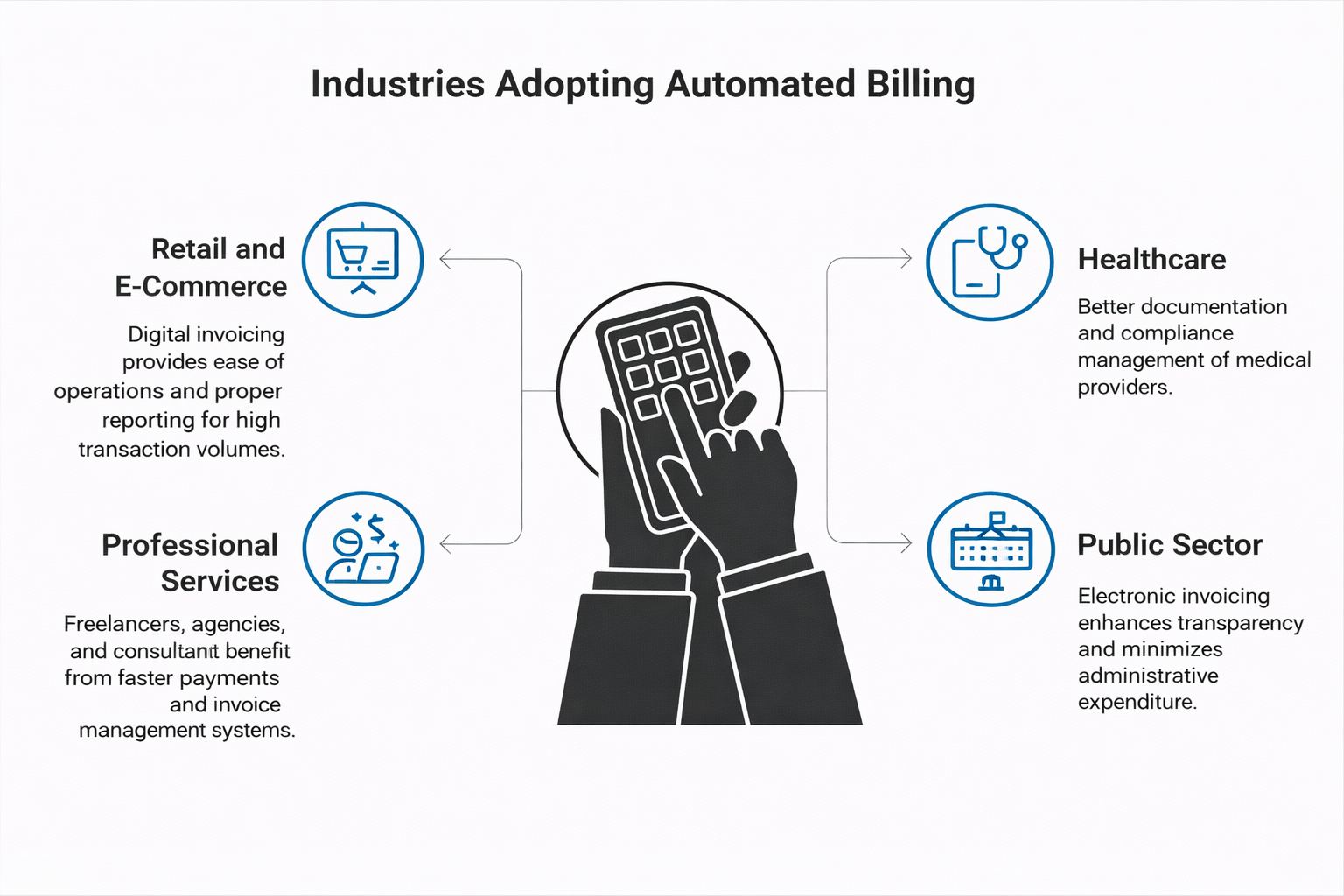
Retail and E-Commerce
Having masses of transactions per day, digital invoicing provides ease of operations and proper reporting.
Healthcare
There will be better documentation and compliance management of medical providers.
Professional Services
Freelancers, agencies, and consultants like faster payments and invoice management systems.
Electronic invoicing is also being applied by the public sector organizations in order to enhance transparency and minimize administrative expenditure.
Common Challenges and How Businesses Overcome Them
Use of a new system involves planning. The advantages are obvious, but in the beginning, companies might experience some challenges.
Employee Adjustment
Manual processes applied by teams can be confused by new systems. Clearly communicated and trained staff are useful in creating confidence and minimizing resistance.
When staff members have a feeling that automated billing will lessen repetitive work, the adoption becomes more convenient.
Technical Integration
The existing accounting software might need to be updated to be compatible with digital invoicing software. Some companies respond to this by engaging in the work of the seasoned implementation partners.
Upfront Investment
Software, setup, and training costs may be incurred initially. These costs are usually compensated by the long-run savings and operational gains.
With careful planning and implementation in stages, the effects of disruption are reduced.
Future of E-Invoicing
The invoicing continues squarely in the digital future. Structured electronic invoicing is the norm in an environment where global commerce is growing, and regulations are changing.
Governments are establishing real-time reporting systems. Companies with an international business need to be flexible to various compliance standards.
Improvements in technology are still enhancing automated billing systems. The next wave of digital transformation is taking shape and form with smart data validation, predictive analytics, and safe and secure transactions monitoring.
Those companies that adopt such changes in time obtain a competitive advantage. They are more transparent, have better compliance and control of finances.
Practical Tips for Companies Transitioning to E-Invoice
Implementation of e-invoicing can be gradual. A well-planned strategy facilitates a nice transition.
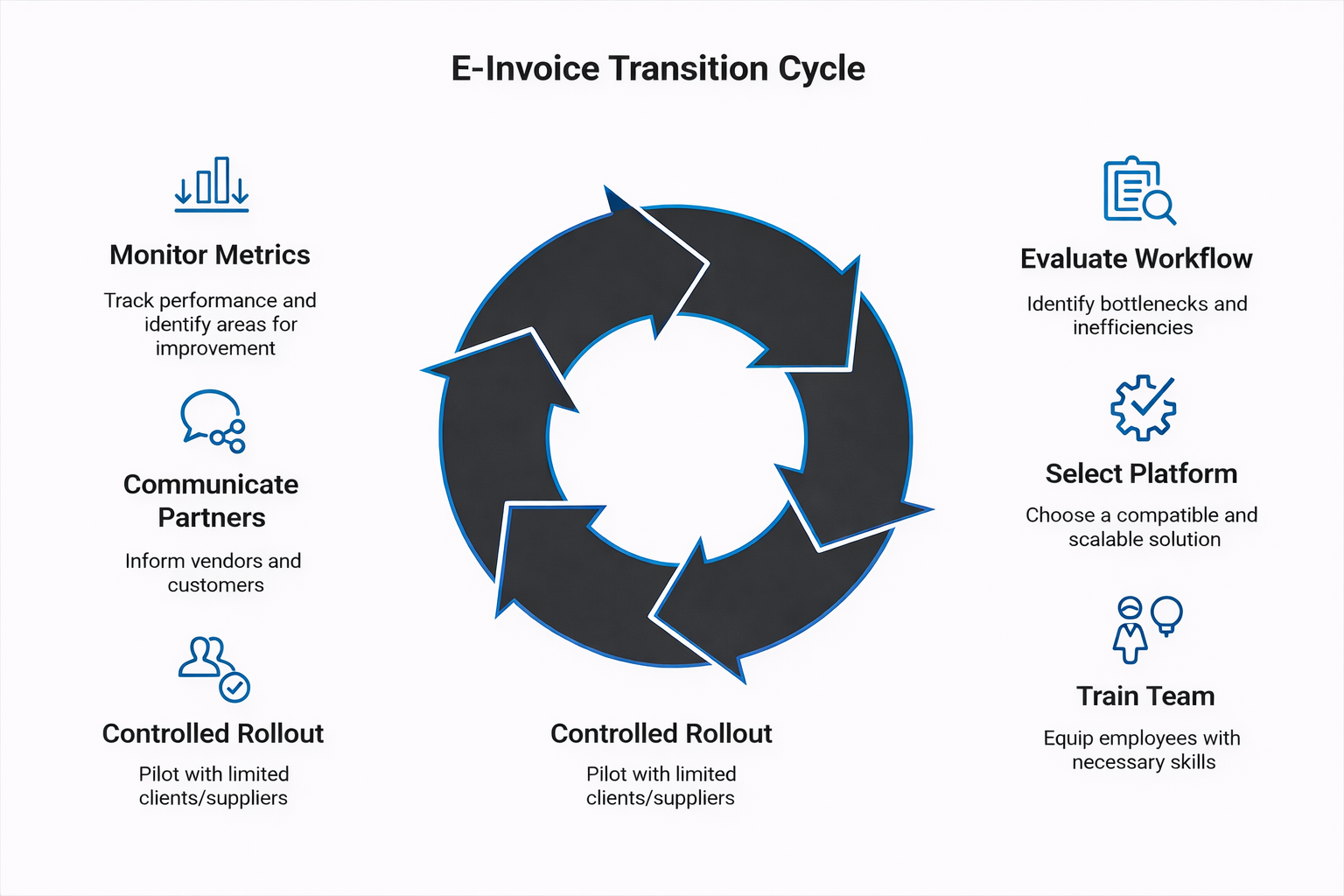
Evaluate Your Current Workflow
Trace the bottlenecks, delays, and manual duplications in your current invoice management process.
Select the Right Platform
Select one that fits in with your accounting software and meets compliance needs, and one that will expand as your business expands.
Selecting the right solution is critical, which is why comparing e-invoice software features helps businesses make informed decisions.
Train Your Team Thoroughly
Invest in training programs so that the employees know the way to use the system.
Start With a Controlled Rollout
Pilot digital invoicing using a limited number of clients or suppliers and then roll out to the rest of the organisation.
Communicate Clearly With Partners
Communicate the transition to vendors and customers to keep them at ease and help ease the adoption.
Monitor Performance Metrics
Monitor payment cycles, processing time, and error rates. Take lessons gained to streamline and fine-tune your electronic invoicing system.
Want to Upgrade Your Business Billing with E-Invoicing?
E-invoicing simplifies the way you create, send, and manage invoices by automating your billing workflow. It reduces manual errors, speeds up payment processing, and keeps your financial records organized. Sign up for PDF Invoicing and make your business operations smarter, faster, and more efficient by switching to digital invoicing today.
Conclusion
The move to e-invoice systems is part of an overall change in the way businesses transact business in relation to financial management. Businesses are abandoning the manual and slow mode of operation and adopting digital tools, which improve accuracy, transparency, and efficiency.
The use of electronic invoicing helps facilitate faster payments, minimizes administrative expenses, enhances compliance, and is integral to sustainability goals. It enables the finance teams to concentrate on strategy and not on paperwork.
As the industries keep changing, digital invoicing will not be an exception, but will be the norm. Those organizations that become adaptable today establish themselves in better financial control and operations in the future. The decision to use e-invoice solutions is not all about becoming modernized. It is concerning the creation of a stronger, more efficient, and future-ready business.
Frequently Asked Questions
1. What Is an E-Invoice and How Does It Differ from a PDF Invoice?
An e-invoice is a structured digital invoice (like XML or EDI) that is created, sent, and processed automatically through business systems. Unlike a simple PDF invoice, which is just an electronic copy sent as an attachment and may require manual data entry, true e-invoicing supports automation, real-time processing, and system-to-system communication.
2. Why Is Traditional Paper Invoicing Becoming Outdated?
Paper invoicing is slower and more error-prone due to printing, mailing, and manual handling. It increases operational costs and risks of lost documents. Modern businesses prefer digital workflows that offer instant delivery, accuracy, and better compliance.
3. What Are the Key Benefits of Switching to E-Invoicing?
E-invoicing speeds up payments through instant invoice delivery and automated approvals. It reduces errors with built-in validation, improves security through encryption and digital signatures, lowers processing costs, and supports better financial tracking and tax compliance.
4. How Can Companies Transition to E-Invoicing Successfully?
Start by reviewing current billing workflows, then choose a platform that integrates with accounting or ERP systems. Train staff, test with a small group of partners, and gradually expand. Monitoring performance metrics helps ensure smooth adoption and quick return on investment.